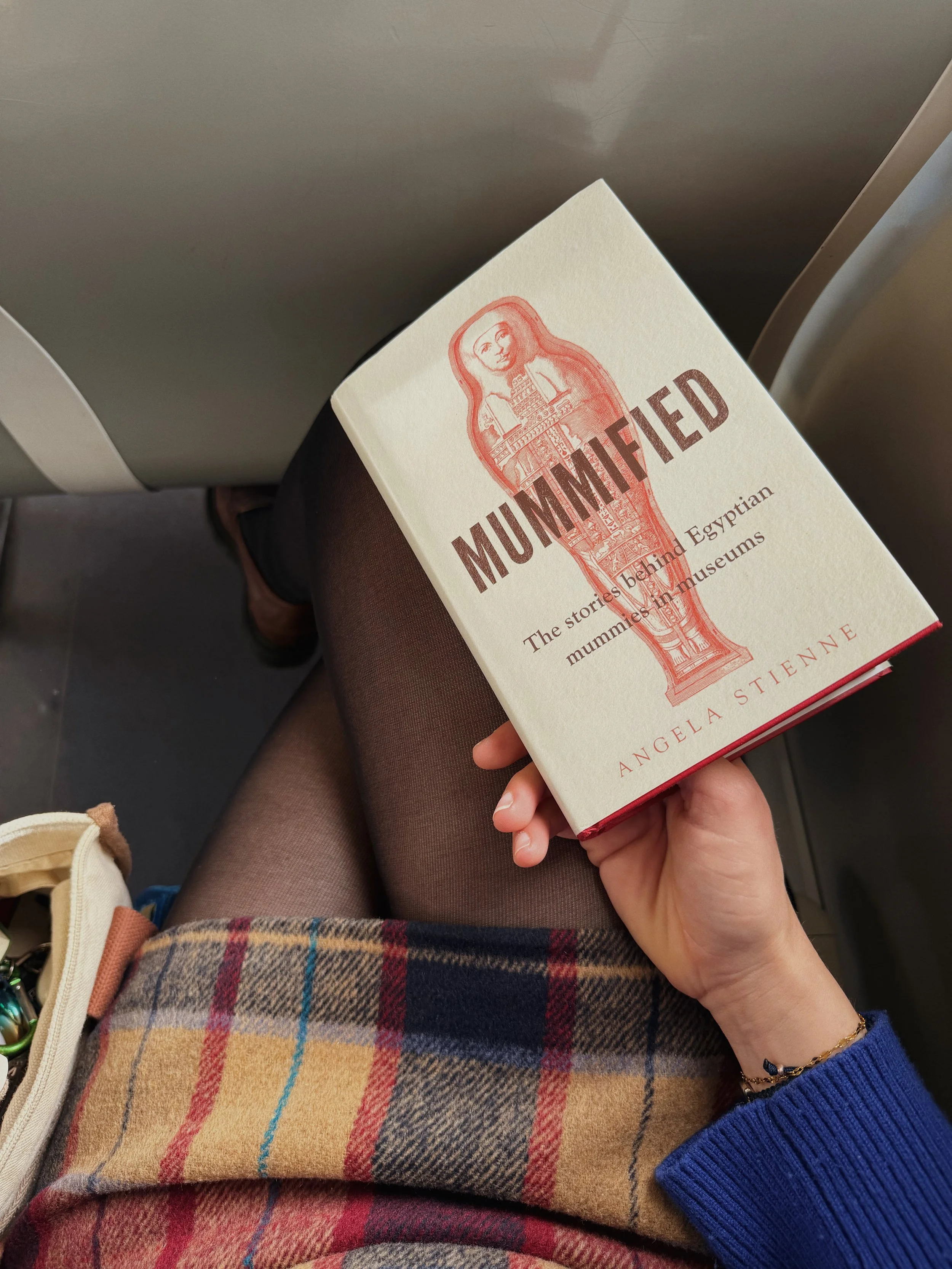
Review: Mummified - The stories behind Egyptian mummies in museums by Angela Stienne

This book was exceptional ★ ★ ★ ★ ★

Stories of displacement, unwrapping, spectacle, and even consumption. Mummified: The stories behind Egyptian mummies in museums is not a book about the history and practice of mummification in ancient Egypt. Instead, it is the story of many ancient Egyptian human remains' second lives that lead to museums, store rooms and personal collections. Angela Stienne confronts the often traumatic second lives of Egyptian mummified human remains at the hands of Westerners in the 18th and 19th centuries.
Mummified by Angela Stienne is fundamentally a book about human kind and ethics, which is discussed through the often confronting and unsettling history of displacement, treatment and display of Egytian mummies (human remains). Ultimately, the book questions whether there is an ethical way to interact and display with Egyptian mummies in museum contexts . The example of using virtual unwrapping as a way of utilising technology for 'non-invasive' display is should not be taken at face value as a 'respectful'.

The entire time, Stienne is challenging you, the reader, to think critically about the history of mummies in England and France and to confront your own biases and experiences with mummies in museums. Why do mummies, human remains of ancient peoples, get displayed in museums today, how did they get there and when did we become so entitled as to imagine we deserve to have access and viewing rights of these bodies, these people. I appreciate the attention given to vocabulary, and even the basic ways that Egyptian mummies are referred to — they are human beings, but at a point in history, they became objects and curiosities. Egyptian mummies have a long history in popular culture, which has aided in the separation in the wider consciousness that they are human beings, and this book works very hard to re-humanise what has long become objects, artefacts, and curiosities.
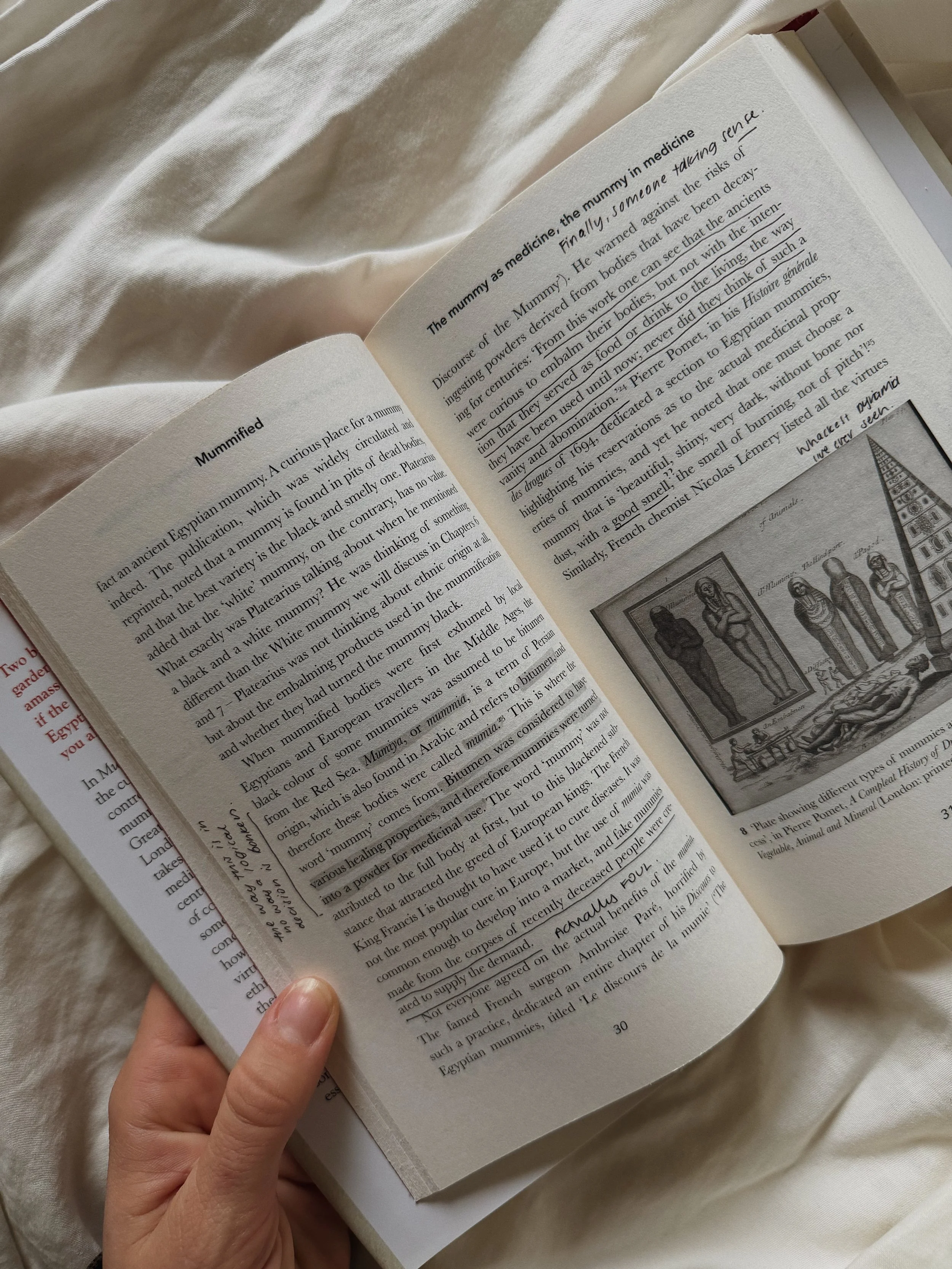
The book digs deep into the roots of racism and dehumanisation of Egyptian mummies, from their forceful displacement during early expeditions in the 18th century, to the inhumane unwrapping and consumption of ancient Egyptian human remains, the development of phrenology, eugenics and the use of the ‘white’ mummy to push specific racial agendas. Stienne follows various specific mummies that are currently housed in various museums and insititutions in England and France, and traces their story and movement from their intended resting place to public display (or storeroom). I admire her inclusion of the difficult, unpleasant and violent treatment of people living and dead in history that has come from the worlds obsession with ancient Egypt.

If you are looking for a book on the history of Egyptian mummification, the process and beliefs of ancient Egyptian funerary practices, this is not the book for you. If you are interested in the ethics of displaying human remains in museums, or if you have ever wanted to know how something from a different continent has ended up in a museum with no clear and available information present, then this is certainly the book for you.

I thought the case studies and personal experiences Stienne included in this book were poignant and, at times, very hard to read. The idea of the ‘other’ viewed by westerners and white Europeans is a pervasive phenomenon that hasn’t gone away, and as Stienne includes towards the end of her book, thinking aliens built the pyramids isn’t funny and quirky, its racist, and frankly shouldn’t be an idea perpetuated in the 21st century.

This is one of the best books I’ve read in 2026, and if you have any interest in archaeology, history, museums or the history of human kind, I would recommend this book.

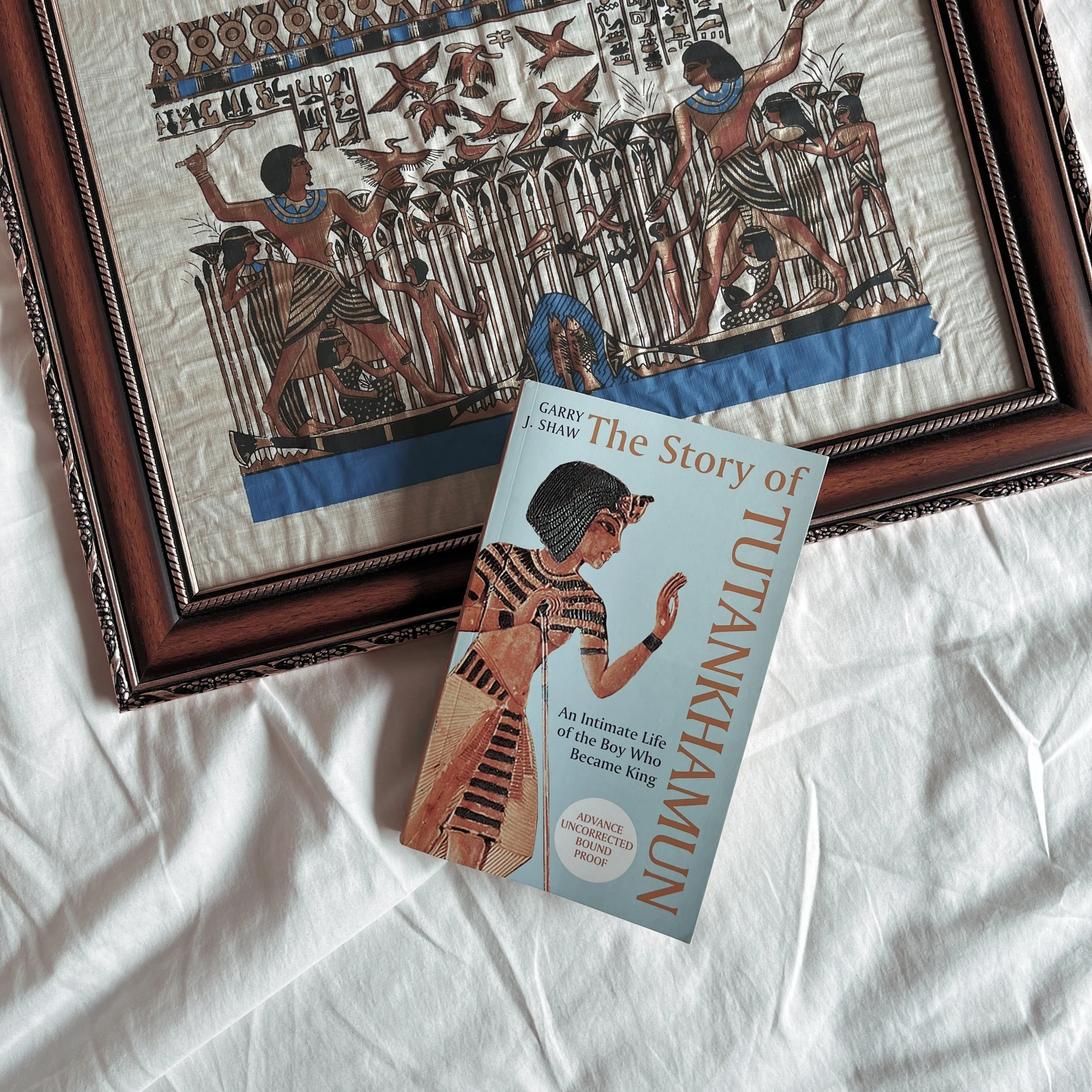
Review: The Story of Tutankhamun by Garry Shaw

★★★★☆.5 | paperback | book twenty-four of 2022 — I was provided a free paperback Advance Uncorrected Bound Proof, and finished hardback copy from Yale University Press — thankyou!


The Story of Tutankhamun by egyptologist Garry J. Shaw is a brilliantly written new biography of the boy king, spanning from his birth and early life under his father Akhenaten’s new religious regime, all the way up to his death and the discovery and subsequent treatment of his mummy and burial goods in the twenty-first century. This is truly a wonderful addition to the centenary celebration of the discovery of Tutankhamun’s tomb in 1922 by Howard Carter and Lord Carnarvon.

The Story of Tutankhamun undertakes a monumental challenge of synthesising everything that we do and do not know about Tutankhamun and displaying that information in a digestible manner that readers of all knowledge levels could not only understand, but enjoy. Shaw’s book utilises the most recent scholarship and scientific data to construct a hypothetical narrative of the boy king’s life, which I absolutely adored. Shaw draws on archaeological evidence, images, texts and all sorts of available data and research to reconstruct Tutankhamun’s life beginning in Amarna under pharaoh Akhenaten. If you aren’t familiar with the reign of Akhenaten, Egypt under this particular pharaoh was radically different as Akhenaten raised the sun disk the ‘Aten’ as the supreme deity of the region. He closed the temples and moved the capital of Egypt to Akhenaten (known today as Tell-el-Amarna). So, Tutankhamun was probably born in Amarna and was definitely born into a unique and radical time in ancient Egypt’s history. Shaw introduces us to how Tutankhamun's early life may have looked, and then goes on to give a really intimate look into just how difficult it would have been for the young boy (because he really was only a boy when he acme pharaoh), to navigate his years as king of Egypt.

Shaw then basically reconstructs the rest of Tutankhamun’s life, and the important things he undertook during his very short reign, and he does this by including as many of the artefacts found in the young king’s burial as possible. There is something deeply intimate about reconstructing the life of a boy who died over three-thousand years ago using artefacts that he would have owned, touched, used, and were deemed important enough to be buried with him to take to the next life.

Shaw doesn't finish his book at the death of Tutankhamun, but goes on to describe ancient Egypt after his death, and the following destruction of his name and image by his successors. Then, he moves thousands of years into the future, and to the incredible discovery of the tomb, and the mummy. I loved reading about the steps involved not only to the initial discovery and why it took so long to be found, but also the arduous and somewhat destructive process it was cataloguing and emptying the tomb.

This new biography of the young king doesn't necessarily add any new information to the wealth of knowledge of Tutankhamun, but that’s not the point. Garry Shaw has done a remarkable job synthesising everything we know and don’t know about Tutankhamun and created a compelling narrative-style breakdown of his life. This book is both a wonderful place for those who are new to Tutankhamun to learn about not only what was found, but how it may have been used during the king’s life, but with all of the recent scholarship to back it up. Not to mention the book is full of stunning colour images of artefacts and historical images which just adds to the tale.

If you are a lover of ancient Egypt, or you would like to learn a bit more about the household name Tutankhamun, then I could not recommend this book enough!