Review: The Hobbit by J. R. R. Tolkien

★★★★☆ I am so happy to have finally read this book, and I am looking forward to continuing my J. R. R. Tolkien reads with the Lord of the Rings trilogy!
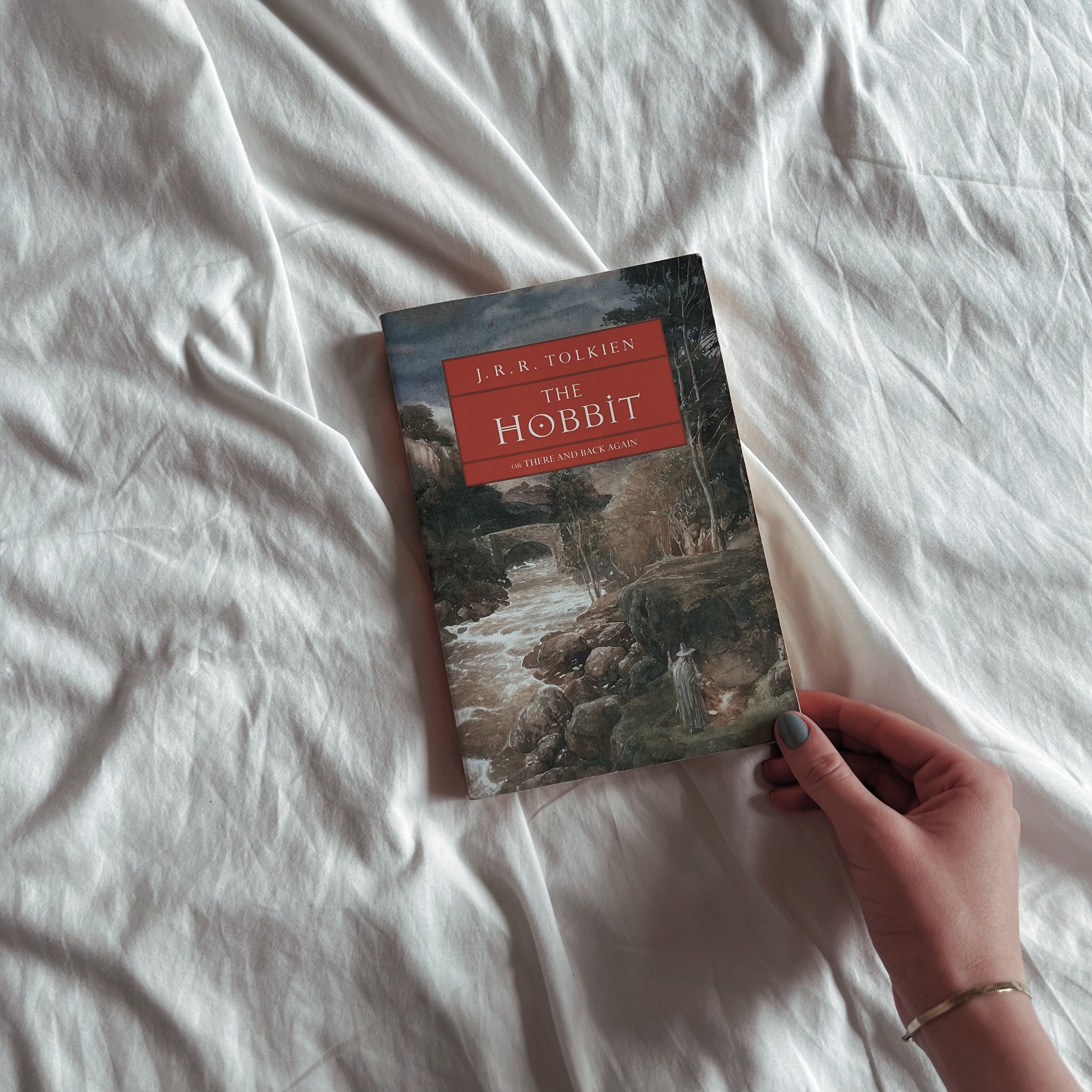
Full disclosure, I have attempted to read this book (and the Fellowship of the Ring) many, many times. Every time I’ve picked it up I have gotten about 20% of the way through and then given up. However, this time was different. I was looking for a new audiobook (I’m now on Scribd and I would definitely recommend it to all you audiobook lovers out there), and The Hobbit popped up on the home screen. I am so glad I decided to hit play, because this book was so wonderful (I know I am probably the very last person on earth to read this book).

I think the main thing I enjoyed about The Hobbit was the feeling that the narrator of the tale was talking right to me. The writing style was so captivating (although more so in the audiobook version for me), and it helps that the narrator, Andy Serkis, was absolutely brilliant. His Gollum is so good and very, very creepy (as it should be since he is the voice of Gollum in the movies!)

There is more in you of good than you know, child of the kindly West. Some courage and some wisdom, blended in measure. If more of us valued food and cheer and song above hoarded gold, it would be a merrier world.

I felt such a kinship with Bilbo and his conflicting desires to be on an adventure, and also be back at his cosy hobbit hole drinking tea and eating cake. I don’t think I have ever related to a character so strongly before, since I always want to be both exploring and adventuring, and also cosy and warm in the comfort of my own home. As you probably already know, Bilbo is joined by thirteen dwarves and the wizard Gandalf in his hobbit hole, and the adventure truly unfolds from there. Bilbo and his team come across goblins and elves and all sorts of magical, wondrous creatures, not to mention, the dragon Smaug. And of course, they get into all sorts of trouble and mishaps on their travels to the Mountain.

This is truly one of the most wholesome, and quite unexpected novels filled with a journey that keeps taking turns you don’t expect. If you’re like me and you’ve been putting off reading this book for no good reason, or the physical books aren’t for you, then I would definitely recommend the audiobook!

Have you read The Hobbit? Please do let me know your thoughts in the comments, or over on my Instagram @kell_read ✨✨
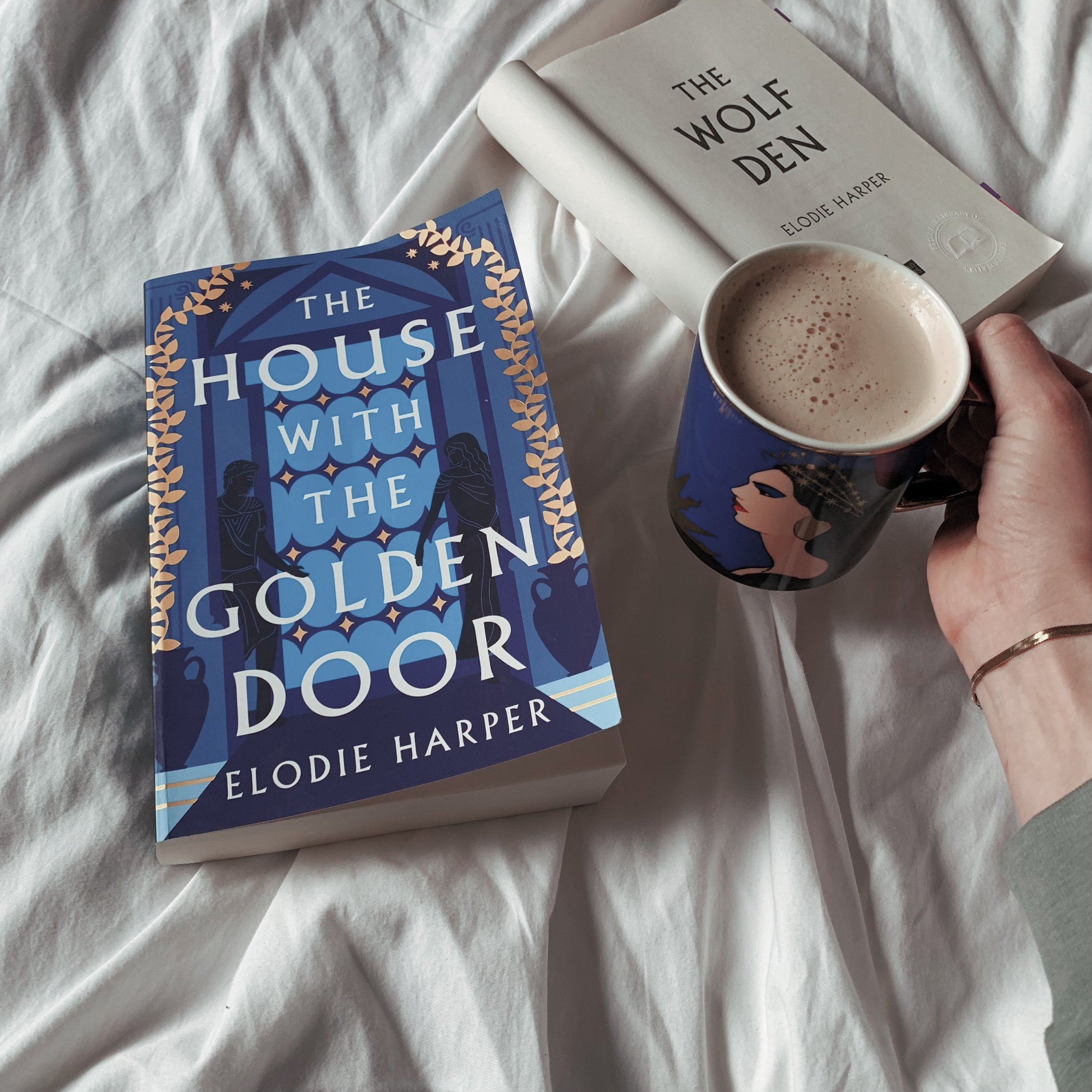
Review: The House with the Golden Door by Elodie Harper

★★★★★ — The House with the Golden Door was probably my most anticipated read for this year, and boy, I was not disappointed! Please do not read on if you haven’t read The Wolf Den.


The House with the Golden Door by Elodie Harper is the second in a trilogy, which began with my favourite read of 2021, The Wolf Den. I am always slightly hesitant when it comes to the second instalment of a trilogy, with many (Catching Fire excluded) often serving as nothing more than a stepping stone or filler to a grand conclusion. The House with the Golden Door, however, did not fall into this unfortunate phenomenon.

Historical Context

Elodie Harper has once again produced a captivating historical fiction novel that takes you right into the streets and the homes of ancient Pompeii. Set in 75 CE, Pompeii is still a thriving Roman town, looked on by Venus Pompeiana, the patron deity of the city. When reading this book, it feels like you are walking right alongside Amara, you can feel the heat beat down on you as she sits in her garden, you can feel the cobblestones as she walks the streets and you can almost see the detailed wall paintings described throughout the book. This is particularly interesting since in 79 CE, Mount Vesuvius erupted and the entire city of Pompeii (and the neighbouring city of Herculaneum) was covered in ash, preserving the daily life of ancient Romans in Pompeii.

First Writer: Lovers, like bees, live a honeyed life.

Second Writer: I wish.

— Pompeii Graffiti exchange (pg. 189)

Harper includes vivid detail of surviving wall art, architectural features and even whole buildings (like The Wolf Den which survives along with the erotic wall paintings). Harper continues to include snippets of graffiti from the walls of Pompeii, and introduces us to different homes and interiors. Harper has the distinct ability to use what survives of the ancient city, and the lives of those who once inhabited it, and bring it back to life, or, has given it a second life, a new life.

My Thoughts

This was a beautiful and heart-wrenching tale. As you know, this series of books follows Amara, a Greek woman who was sold into slavery and ended up as a prostitute in the brothel at Pompeii, known as the Lupanar or ‘Wolf Den.’ At the end of the previous instalment, poor Dido was killed, and Amara was freed by Pliny, and given a new home to live in by her Patron, Rufus. So although she was heartbroken with the death of her friend, having to leave her fellow women behind at the brothel and having to end her budding romance with a fellow slave Menander, she was feeling optimistic about her newfound freedom. Just because this book wasn’t set primarily in the brothel doesn’t mean it was a light and happy read. Amara has to be more courageous than she ever has before in the face of heartache and betrayal. Her friendships with the women she left behind don’t remain the same as when they were all at the same social standing, and the fluctuation of these personal relationships made this story feel all the more real.

The gods raised you to freedom. Treating slaves as equals only lowers you back to the gutter you came from.' (pg. 90)

The House with the Golden Door is an incredibly nuanced exploration of the social lives and class structure both in Pompeii and the wider Ancient Roman world. We see these social complexities all through the eyes of Amara, who is grappling with her own shifting status, now as a freedwoman, with slaves of her own, however still at the complete mercy of Rufus, and to another extent Felix. Harper delves into these social complexities by exploring the rules to be upheld and the social expectations to be maintained by a freedwoman, who wants to reclaim agency over her own life but is still restricted. I think what struck me early on was how believable it all felt. We as readers experience the conflicting aspects of Amara’s life, the intricacies of social relationships she has to uphold, and the deterioration of some of her friendships. To expect her relationships to stay static while she changes as a character in both status and mind, would feel false. However, Amara’s liminal role as a freedwoman dependant on a man whose love is dwindling and who knows intimately the life of a slave, traverses a new world of love, deceit and friendship that sees her continually grow in courage and strength.

I love the way Harper sets up her chapters. She prefaces each chapter with a quote, either from an ancient poet or writer, or graffiti found at Pompeii. These aren’t just random quotes, but they are imbued with the theme of the following chapter, and really set either the physical or emotional scene for Amara. These kinds of details absolutely blow me away, and it’s one of the main reasons why I adore this book (and its predecessor).

Have you read The House with the Golden Door or The Wolf Den? I would love to hear your thoughts in the comments below, or over on my Instagram @kell_read

April Wrap Up 2022

The leaves are turning orange, the air in the morning is crisp and the fog is clinging on for longer and longer everyday. Autumn has finally, truly arrived and I am in my element. Autumn is my favourite season, cold nights, and warm days. The changing colours of the trees and the slow transition from dresses to sweaters. Unfortunately, I spent an entire week of this beautiful month in my room with covid, but this month we also added a new member of the family. Our beautiful puppy Maisy is now almost 12 weeks old and I love her with all my heart.

Since I spent so much time locked down with nothing much to do other than read and watch TV, I used the time to work through my every growing pile of books I’m currently reading. This month I finished 5 books, one audiobook and four paperbacks.

★★★★☆

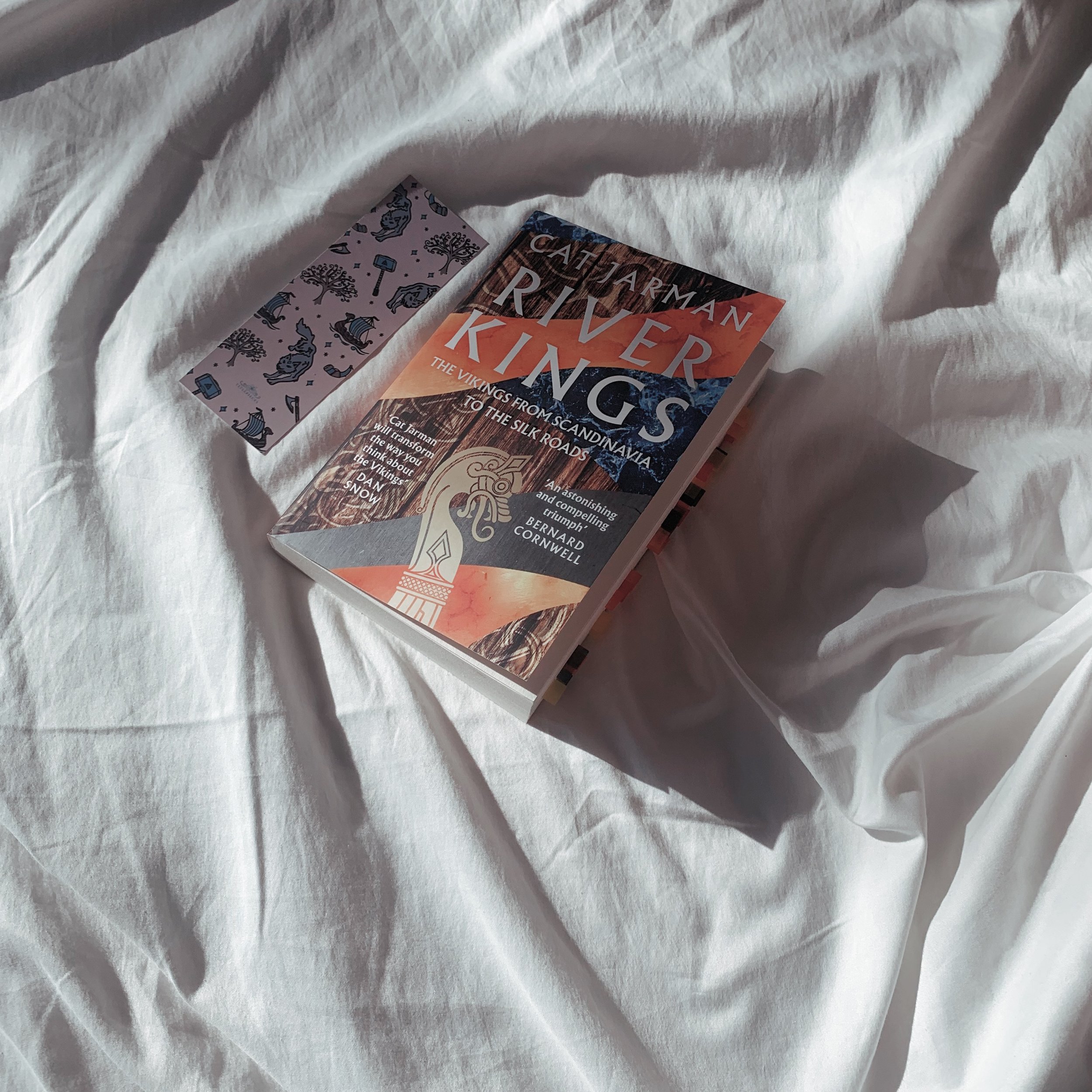
The first book I finished was River Kings by Cat Jarman. I was so lucky to be given a copy of this book for review by Pegasus Books but I ended up going out and buying the paperback version of it before I had finished reading it! River Kings, written by bioarchaeologist Cat Jarman (who is also a field archaeologist who specialises in the Viking Period) takes a small carnelian bead found in the site of Repton and follows what may have been its journey through the Viking world all the way to Baghdad and India. Jarman works with DNA analysis, isotope analysis and radiocarbon dating of the archaeological finds to trace the Vikings from Britain, through Scandinavia and ultimately uncovers greater interaction and movement between the west and the east. This book was so well written and incredibly fascinating. I would recommend it to lovers of trade connections in the ancient world, those who find material culture theory fascinating and all lovers of the Vikings.

★★★☆☆.75

Next, I finished my audiobook of Fire by Kristin Cashore. This young adult series is nothing like I imagined it to be, but I am thoroughly enjoying listening to it. I found it a bit slow for the first few hours but once we were introduced to the other main characters of the story it really picked up the pace. I was initially sceptical of this sequel to Graceling because it follows the character of Fire who is what is known as a monster with red, pink and orange hair and who makes men and women lose their minds around her. She is a new character (as are most of the other characters introduced in this instalment), and we don’t hear anything of the characters from the previous book. It didn’t take long though for me to enjoy this part of the world and these new characters, although I didn’t end up enjoying it quite as much as I enjoyed Katsa’s story in Graceling.

★★★★☆

Book number three that I finished this month was House of Sky and Breath by Sarah J Maas. By this time of the month I had contracted Covid so I had plenty of free time and just enough ability to focus to finish this mammoth book. One thing I MUST mention and that I didn’t realise in my first read of CC1 (because it was an audiobook) is the amount of mythology and ancient history from different cultures Maas has used in these stories. Midgard as the name of their planet, Hel as the dark realm, numerous gods and beings, Vanir, SPQM. I could go on! I loved being back in the world of Bryce, Hunt and Ruhn (especially since we got so much more from interesting side characters like Hypaxia, Ithan and Tharion). There was some great character development and although I knew there was some shady shit going on with the Asteri, this book just kept throwing curveballs that I didn’t see coming. I didn’t enjoy it as much as CC1 which is a bummer, and every now and then I had a ‘huh?’ moment where I feel like Maas’ writing was confusing, almost as if she forgot whose POV she was writing from. And that’s another thing, I love multiple POVs, this book included, but I feel like sometimes she just glided from one perspective to another and didn’t really make it obvious enough for it to not be confusing… if that makes sense?

★★★☆☆.75

You would not believe it but I finally finished Assassin’s Quest by Robin Hobb, and I have decided that I am going to keep on reading these books despite it taking me over 6 months to finish this book! This final instalment of the Farseer Trilogy was the longest and was oftentimes a bit repetitive and slow which was why it took me so long to finish. But once I got into the really juicy last third of the book I absolutely raced through it. I could not put it down. Robin Hobb’s world-building, character development and general fantasy writing ability is truly unseen anyplace else. Her prose is unique and you just can’t help but want Fitz to be happy and healthy at the end of everything he goes through. Less of a battle and action style fantasy is this a soft, political and intricate fantasy. I truly never saw the ending coming. One other highlight for me in this book is the friendship between the Fool and Fitz, and the companionship of Nighteyes.

★★★☆☆

My final read for this month was meant to be a buddy read but honestly, I had nothing else to do with my time so I just read the whole thing in two days, and that was Ninth House by Leigh Bardugo. Despite not loving the Shadow and Bone series (I gave them all 3 or 3.5 ★) I came into this story with high hopes as a dark academia story about secret societies with ghosts set at Yale. However, I was left a little disappointed. This book had such potential, the premise sounds right up my alley but I think a combination of writing style, an unlikable main character and seemingly unnecessary trauma left me not quite satisfied with it. The story itself was interesting, with secret societies at Yale working will all sorts of magic and mystical things under the supervision of Lethe, students specifically chosen to keep the societies in line, but the writing style just wasn’t it for me. Not to mention the main character Alex (short for Galaxy) was unlikeable and flighty. Without a doubt, the supporting characters Darlington and Dawes were interesting and complex characters that I would have loved to learn more about. There are also a lot of trigger warnings needed for this book, and thanks to Samantha at Thoughtsontomes who provided this list on her Goodreads review — rape; murder; child molestation; physical and emotional abuse from partner; grooming; gore; possession; drug abuse; overdose; death of a friend. Please do make sure this book is for you before picking it up because honestly, some of this came out of nowhere. Overall the plot itself kept me interested enough to finish it and to want to read the sequel but it hasn’t become a favourite like I thought it would.

I would love to hear your thoughts on any of the books I read in April! What did you read this month? Any new favourites? Let me know in the comments or over on my Instagram @kell_read

Review: River Kings by Cat Jarman

★★★★☆ — thanks to Pegasus Books for providing me with the e-book of River Kings! In true Kelly fashion though, I did eventually go out and buy a paperback edition as well.


River Kings, written by bioarchaeologist Cat Jarman (who is also a field archaeologist who specialises in the Viking Period) takes a small carnelian bead found in the site of Repton and follows what may have been its journey through the Viking world all the way to Baghdad and India. Jarman works with DNA analysis, isotope analysis and radiocarbon dating of the archaeological finds to trace the Vikings from Britain, through Scandinavia and ultimately uncovers greater interaction and movement between the west and the east. Jarman uses these new scientific methods to gain new information from the bones and teeth of bodies we have known about for years, but now we can understand through the isotope analyses of bones and teeth where these people were born, their some of their migration history and even the type of diet they had. Using new scientific discoveries, archaeological evidence and the historical record (taking into account their bias and unreliability), Jarman starts in Repton, Darbyshire and follows the journey of a single carnelian bead through the world of the Vikings, using other objects as stepping stones to gain a new understanding of the movement and trade in the Viking world between Britain and as far as Gujarat, India, where the carnelian bead may have begun its journey.

At the beginning of each chapter, Jarman contextualises the object that will be the focus of the coming chapter in either a fictional or non-fictional way, imagining how it may have been used in the Viking world, or telling us of its modern history such as when it was discovered. It made me think of the structure of The Real Valkyrie which did something very similar at the beginning of each chapter! Early on, Jarman highlights issues she and other scholars and archaeologists face when interpreting evidence from the Viking world and doesn't hesitate to err on the side of caution when proposing solutions for issues in the book. Jarman introduced the old information, the new scientific information and even the biased and unreliable historical information and then proposes a tentative conclusion that gives the reader the opportunity to agree with her interpretation of the evidence, or to disagree. Her own personal experiences and insights really enriched the book, and gave weight to her suggestions and conclusions throughout the book.

The graves we find are multifaceted: we have no way of knowing whether those items even belonged to the deceased or whether they were gifts placed there by the mourners. They may not even reflect much about the person’s life… The dead do not bury themselves. (21)

…but unless you have another form of proof, it is practically impossible to prove the intention behind their death (38).

I am fascinated with the archaeology of death, and Jarman takes the time to highlight the issues surrounding interpretations of bodies, grave goods, identities and even the intention behind violent deaths and she does it succinctly, and early on in her book which really sets the tone for her interpretations and tentative conclusions later on. Jarman suggests caution when interpreting scientific evidence, and that we can only glean so much from the bones and the teeth about an individual. Honestly, it completely blew my mind, the things that we can learn from the different types of scientific dating and analysis.

Jarman dedicates much of her book to women in the Viking world and their place in the archaeological record, as well as slaves and their lack of representation in the record despite the lucrative slave trade we know was being conducted during this time. So much of this book fascinated me, and one of those things was how the early work at Repton overlooked women due to their skewed views on women at the time. Not to mention the dispute over the warrior woman found at Birka and the interesting discourse surrounding her. It has been questioned that just because she was buried with weapons does that make her a warrior in life, but these kinds of questions aren’t ever asked about men buried with weapons… Another topic of personal fascination is the discussion around how we cannot know the social significance and meaning of exotic goods in the Viking social context, and the recontextualising of material objects between different groups and cultures can transform their purpose and function. Were they a show of status and wealth? Did exotic goods show an individual’s power?

…genetics is not going to give us the ultimate answers: cultures and identities are far more complex and there is no such thing as a ‘genetic Viking.’ (128)

River Kings is like a stepping stone to even more answers about the Vikings, the objects they left behind and their, movement throughout their known world. As more testing is conducted and new evidence is found, more and more will be understood about the Vikings, and this book is like the first piece of the puzzle on the journey to understanding the whole picture. Not only does Jarman work to understand how a single carnelian bead ended up in a Viking burial at Repton, but she stresses the importance of our understanding of how these types of objects fit into the wider Viking world. This book is a truly rich insight into the trade and movements of people, beliefs and objects in the Viking world, and I could not recommend it enough to any lover of archaeology, ancient trading and the Vikings.

Have you read River Kings? What did you think of it? Do you have any book recommendations for lovers of Vikings? Let me know in the comments of this post, or over on my Instagram @kell_read

International Women's Day

Hello lovelies!

Not only is today International Women’s Day, but its Women’s History Month — it’s a time dedicated to highlighting the contributions and achievements women have made in history and around the world, and to remember that there is so much further to go when it comes to women’s safety and gender equality. I am lucky to be surrounded by women who are driven, motivated and work hard to achieve their goals and every day I am proud and honoured to be a part of their lives.

This year’s International Women’s Day Theme is #breakthebias —

Imagine a gender equal world.

A world free of bias, stereotypes, and discrimination.

A world that is diverse, equitable, and inclusive.

A world where difference is valued and celebrated.

Together we can forge women's equality.

Collectively we can all #BreakTheBias.

Thank you to all of the women before me that broke down barriers and thankyou to those women around me who inspire me and challenge me. May we keep rising, supporting one another and challenging each other to reach greater heights.

In honour of International Women’s Day and Women’s History Month, here are some books recommendations that feature strong female characters and that I personally loved ✨

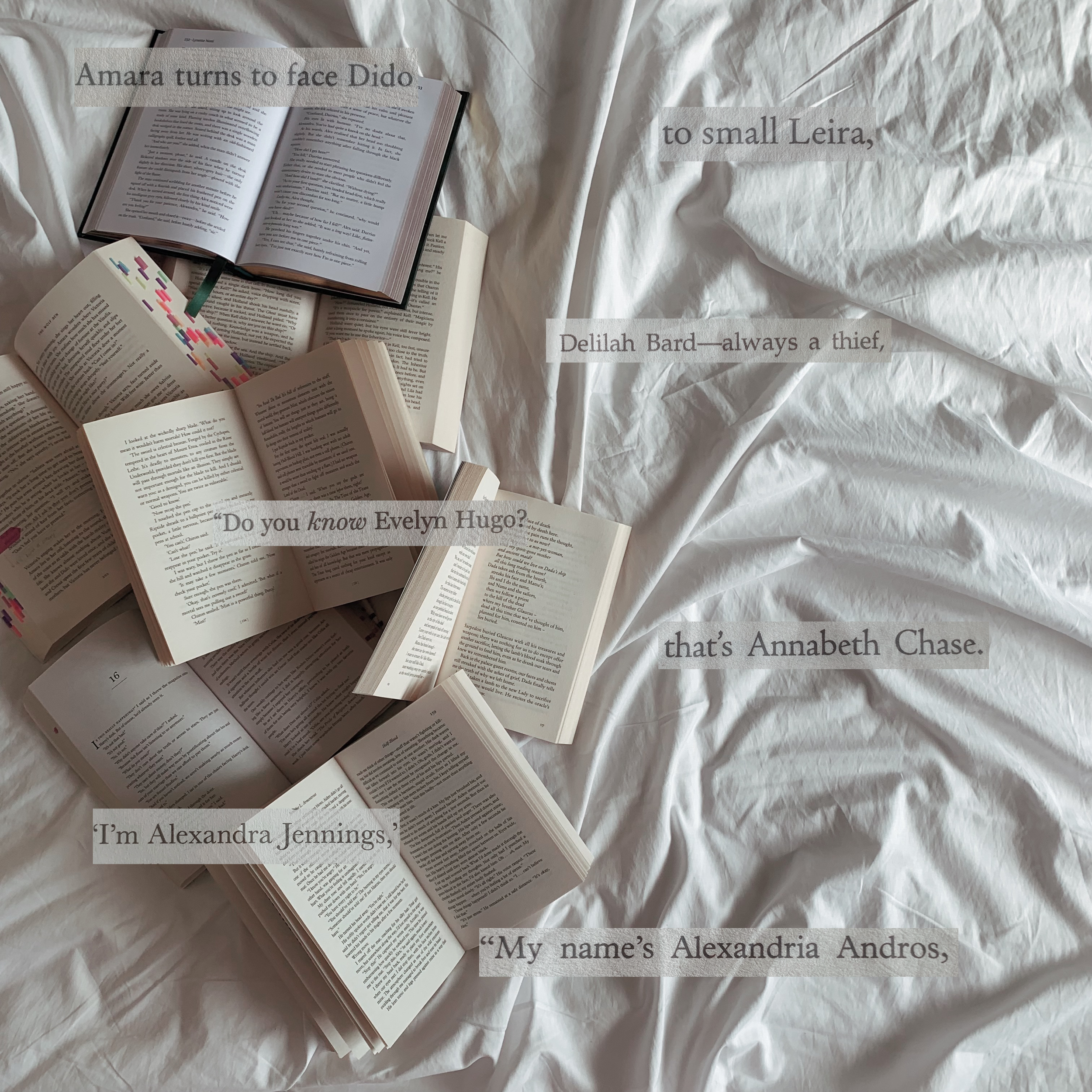
The Covenant Series by Jennifer L. Armentrout is a young adult fantasy-esq series that follows the incredibly badass Alex, a half blood (half descended from the Greek Gods) in a world full of daimons, politics, and hunky guys. A must read!

The Wolf Den by Elodie Harper is a book I can’t stop raving about and you should all definitely read! The Wolf Den follows Amara, a girl brown to a middle class Greek family who finds herself as a prostitute in the brothel of Pompeii. This book is full of female friendships and women supporting women, as well as a look into the lives of women in Ancient Rome.

The Seven Husbands of Evelyn Hugo by Taylor Jenkins Reid is a story loosely based off the life of Elizabeth Taylor, and recounts the life of Evelyn Hugo and her seven marriages. Hugo is such a strong, determined protagonist, this book really took me by surprise with how much I enjoyed it.

Swallow’s Dance by Wendy Orr is a middle grace novel set during the volcanic eruption of Thera in the Bronze Age Aegean. The story follows Leira who was beginning her Learnings to become a woman before her life was thrown into chaos. This is truly a coming of age story, and an incredibly heartwarming one set during my favourite time period!

The Darker Shade of Magic series by V.E. Schawb is one of my favourite series, and a lot of that is to do with Delilah Bard, one of the main protagonists of the series — an aspiring pirate and professional pick pocket. Her growth throughout the series is a pleasure to read, and hearing that this series is getting more books makes me so happy!

As you all should know by now, the Percy Jackson series by Rick Riordan is one of my all time favourite series and is genuinely an important part of my personality. Much of my love for the series has something to do with Annabeth Chase, one of my favourite female literary characters of all time — working hard to inspire young girls to be incredible badasses every. damn. day.

The last female character I want to highlight in this post is Alex Jennings from Lynette Noni’s Akarnae series. Alex is thrust into a brand new world and faces all sorts of challenges both physical and emotional, and honestly, she growth throughout this series makes me so proud. Such an enjoyable young adult series that I cannot recommend enough!

So, that’s probably enough from me! Let me know your favourite female literary characters in the comments below, or on my International Women’s Day post over on Instagram ✨✨

February Wrap Up 2022!

Wow! What a month — it has absolutely flown by and I can see my year only getting more busy! I am so thrilled that Melbourne has come alive again (and honestly, so have I). There is this buzz of excitement constantly around and it has been so infectious. I haven’t posted much on my blog this month, but I am far more active over on my Instagram so be sure to check that out if you’re after more frequent posting!

I started this month off on a little getaway to one of my favourite places in Victoria, and it was genuinely the best way I could have possibly started this month. I have been so busy since returning home — my weeks have been filled with work and brunches and dinners and little adventures with friends. We have truly been making up for all that lost time. I also started tennis lessons on a whim. I’m three lessons in and I’m thoroughly enjoying it (although I haven’t quite figured out how to aim yet!) So with all that being said, I guess it isn’t surprising that I didn’t get quite as much read this month as I did last!

In February I finished listening to The Folk of the Air series with The Queen of Nothing and How The King of Elfhame Learned to Hate Stories. This entire series ended up being a solid ☆☆☆.5 — I definitely enjoyed listening to them and I was certainly invested in the story but I didn’t love them. They were the perfect books to listen to though, not only was the narrator great but I think they were perfectly suited for listening rather than the physical books. I have a feeling I may not have enjoyed them as much as I did if I read the physical book — I honestly don’t know. Maybe one day I will give them another go reading the physical. Overall I was entertained with the story and the characters, although I don’t love Jude all that much and I only like Cardan more now that I’ve read the novella from his point of view. I can’t really say much at all without ruining it, but overall it’s an easy series to read, the world is rich and well developed and its an entertaining story.

☆☆☆☆.5

Other than the two audiobooks I finished this month, I also read Queens of Jerusalem: The Women Who Dared to Rule by Medievalist Katherine Pangonis (** I was gifted the PDF of this book, but I have since gone out and purchased it myself). This book was such a brilliant read! Not only was it written in a really accessible way, but it was also incredibly enjoyable. Queens of Jerusalem focusses on the lives of the royal women who ruled in the Medieval Middle East (or Outremer) from 1099 to Saladin’s conquest of Jerusalem in 1187. These women have been consistently overshadowed by the kings and leaders of the crusades, and this book strives to change that. The women Pangonis writes of in this book are simply remarkable, what they achieve during their lives and how they work the system of Outremer politics is fascinating. A most interesting discussion that is carried through the book is the difference between having power and having authority and it made me reflect on other women in history and the balance of authority and power that they juggled with. This book will make you rethink the way modern readers and scholars approach ancient, medieval and renaissance women, and it fills the women shaped gap in Crusader history.

I still haven’t finished Assassin’s Quest by Robin Hobb, but I’ll just keep going with it until I do. I am also currently in the midst of reading River Kings by Cat Jarman and The Ancient Greek Hero in 24 Hours by Gregory Nagy. I am also re-reading House of Earth and Blood by Sarah J Maas because it has been about a year and a half since I first read it, and I remember nothing from it. I am also listening to Graceling by Kristin Cashore with I am really enjoying - plus the narrator is fantastic! Ideally in March (my birthday month, yay ✨) I will finish River Kings, Graceling and House of Earth and Blood but my new job is very reading-heavy so I have a feeling my recreational reading will drop a bit… but we shall see!

I would love to hear all about the books you read in February, so either let me know what you read and if you loved it in the comments below, or come find me over on Instagram

Review: Queens of Jerusalem - The Women Who Dared To Rule by Katherine Pangonis

★★★★☆.5 | ebook | book eleven of 2022 — I was provided a free PDF copy of Queens of Jerusalem from Pegasus Books


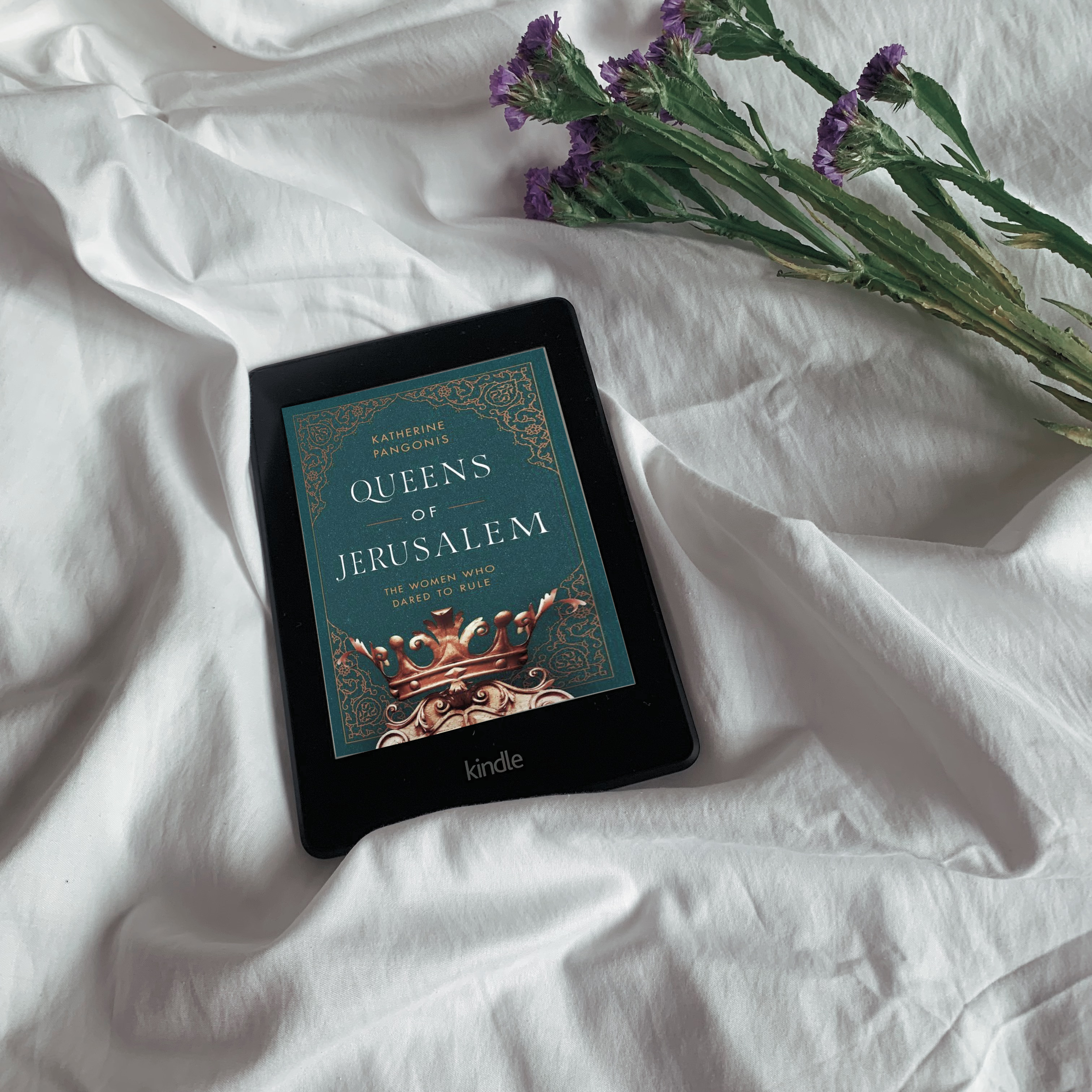
A kindle reader is on white linen to the left of small purple flowers with long green stems. The kindle is showing the book cover of Queens of Jerusalem by Katherine Pangonis

Queens of Jerusalem: The Women Who Dared To Rule by Katherine Pangonis is a non-fiction book focussed on the lives of the royal women who ruled in the Medieval Middle East (or Outremer) from 1099 to Saladin’s conquest of Jerusalem in 1187. These women have been consistently overshadowed by the kings and leaders of the crusades, and this book strives to change that. By putting the Queens of Jerusalem, the Princesses of Antioch, and the Countesses of Tripoli and Edessa to the fore, readers not only get a brand new look into the history of Outremer during the early crusades but they are reminded that women were present and active during this time in history. It is about time these strong, ruling ladies were brought to the forefront of history, and Queens of Jerusalem does just that.

They have been remembered as the wives, mothers, daughters and sisters of powerful men, not as autonomous individuals and active leaders with their own political agency (Pg. 22)

Pangonis begins with Morphia of Melitene, Queen of Jerusalem and mother of four more influential women in Outremer history; Queen Melisende of Jerusalem, Princess Alice of Antioch, Countess Hodierna of Tripoli and Abbess Yvette of Bethany and describes the lives, events and obstacles overcome by all of these women and their daughters, nieces and step-daughters including Princess Constance of Antioch, Agnes of Courtenay and Queen Sibylla of Jerusalem among others. Of course, Pangonis hasn’t failed to include probably the most well known Queen during this time period, and that is Eleanor of Aquitaine. Although Eleanor of Aquitaine wasn’t a ruling woman of Outremer but instead Queen of France, and then Queen of England, Pangonis makes a very convincing argument that Eleanor’s time with her husband during the Second Crusade in Outremer affected her in later life and shaped her into the woman she has been remembered as.

As someone who has learnt about the Crusades and Medieval Europe, I was embarrassed to admit the only name I recognised in this list of influential women was Eleanor of Aquitaine, but now that has all changed. Pangonis has done an exceptional job relating the history of Outremer and the Holy City of Jerusalem from the coronation of Queen Morphia of Jerusalem to the resilient Sibylla, Queen of Jerusalem who defended her city and her people against Saladin. Her writing style is accessible, entertaining and clear. At times, I forgot I was reading a non-fiction account of real people, such is Pangonis’ talents at recounting the lives of these women. Often embroiled in scandal the lives of the elite of Outremer read like a Medieval sitcom with whispers of affairs and men choosing to marry the daughter instead of the mother. It is equally surprising (given how interesting these women were) and unsurprising (given the time period in which they lived) that the main chronicler of the time, William of Tyre, gave so little mention to the queens, princesses and countesses of Outremer. William began the trend of excluding the women of Jerusalem from the records, but this book works tirelessly to undo his shortsightedness.

He [William] does not give much credit to the notion that the women he writes about were individuals as complex as the men, and he prefers to cast women as literary tropes rather than depict them as living, breathing humans (Pg. 36)

A most interesting discussion that is carried through the book is the difference between having power and having authority. For example, Constance the rightful princess of Antioch had authority as the daughter of Bohemond II, the granddaughter of Bohemond I and the mother of Bohemond III but only half of the surviving charters her husband Raymond issued were with her consent (158-9). This suggests that although she was a princess and held that position of authority in her own right, she didn’t seem to wield any political power. Pangonis demonstrates this difference between power and authority numerous times throughout her book, and often brings in the other women to make comparisons with, such as Constance and Raymond compared to the reigning couple her aunt Melisende and Faulk.

Queens of Jerusalem truly gives the voice back to the ruling women of Outremer from 1099 to Saladin’s conquest of Jerusalem in 1187 and is a wonderful read for lovers of medieval history, revisionist history and books on the lives of women. It has been written with care and consideration of both bias from the medieval chroniclers, and the issues involved in modern terminology and views of feminism and misogyny.

The way women are presented within chronicles may not actually reflect the reality of their standing in society. With this in mind, the word ‘misogyny’ can only be uncomfortably applied to medieval society, but it may be more comfortably applied to medieval chronicles (Pg. 35)

This was a wonderful and incredibly insightful read, filling a gap in the literature of the Medieval Ages that has been empty for too long. If you have read this book, I would love to hear your opinions! Make sure to let me know in the comments or you can find me @kell_read on Instagram

January Wrap Up 2022!

The first month of 2022 is already over, and I managed to read 8 books. This kind of number only happens when I have time off during the month so I definitely don’t expect to enjoy this many books every month. It was a very solid start to my goal of 40 books this year though! I have also decided to change my approach to reviews this year - I think up until December I had reviewed every single book I read, but I don’t think that’s a sustainable goal for this year. I will probably only do a full review of the books that I really loved or had a lot of opinions about and just do mini-reviews of the others on my Instagram, and in my monthly wrap-ups. If there’s ever a review you really want to see, please don’t hesitate to let me know!

This entire series is a ★★★★★ read!

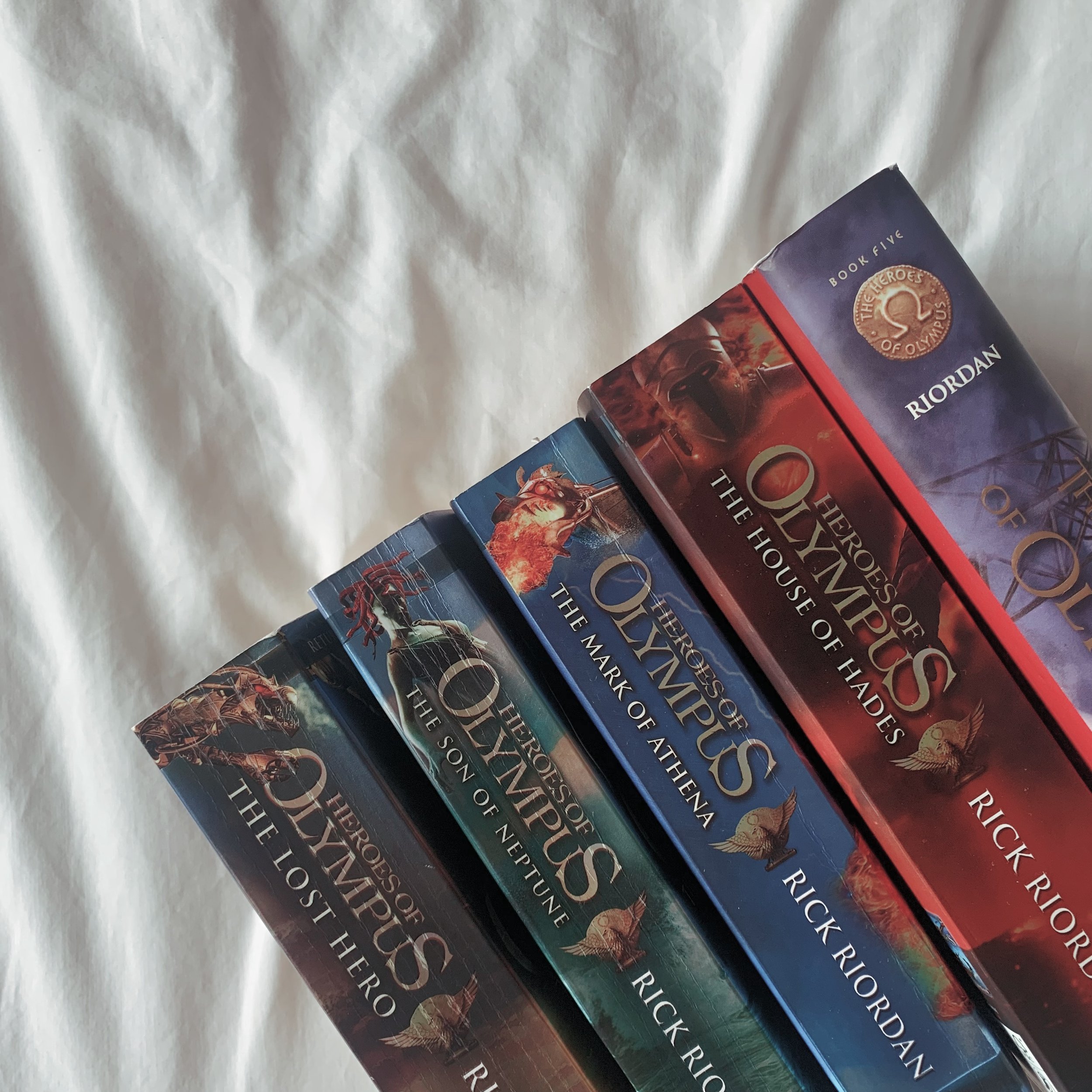
The first books I finished this year (and this month) were my re-reads of The Mark of Athena, The House of Hades and The Blood of Olympus by Rick Riordan. This is the spin off series from the Percy Jackson and the Olympians Series and finishing these three concluded my re-read of all ten books! I enjoyed my re-read as much as I first enjoyed reading the series many years ago, if not more since now I feel like I get a lot more out of them considering I know more about the ancient world. I definitely appreciated the skill of intertwining so many myths and customs from both Ancient Greece and Ancient Rome into the spin off series - this series is genuinely an absolute masterpiece. The House of Hades has always been my favourite of this series, but I think the The Mark of Athena may be equal to it now - I cannot get enough of Percabeth which is why these are absolutely my favourite in the series (they were done so dirty in the final instalment, although getting a Nico POV was such treat). If you’ve read the Percy Jackson books but not the spin off, I implore you to pick them up. They are an absolute treat!

Next, we were all blessed with Part Two of Lynette Noni’s A Very Medoran Kaldoras, something I had made myself believe would never happen. This was a very short e-book, but it answered all of the burning questions I had after finishing the cliffhanger of Part One. In a sense, I was pretty lucky because I only had to wait a couple of months between the two e-books, but I feel so bad for those who waited a super long time. Personally, I really liked Part Two (I know there has been a bit of contention surrounding it). I though it was a lovely way to truly close the door on Alex’s story in the best way possible, but of course, leave the for wide open for potentially more stories in the future? Who knows. I’m just happing knowing that after all Alex went through, she got her closure and her happily every after.

Both have gotten a ★★★☆☆.5 from me!

I finished two audiobooks this month, The Cruel Prince and The Wicked King by Holly Black. The Folk of The Air series is one that had been on my radar for a while, especially since it’s all over bookstagram so I decided it was time to jump in. The narrator on Audible is pretty entertaining, although there have been some really weird edits and volume changes throughout them which have been a bit jarring. After Jude’s mortal parents were murdered, she was taken to live with her parent’s murderer to live in the High Court of Faerie, where its dangerous to be a mortal. Prince Cardan hates her, and the intrigues of the palace just get more and more bloody. Throughout these two books Jude steels herself to what she has to do to claw at the power, and keep it once it’s in her grasp. I am very on the fence about these books. I definitely enjoyed them, but I wasn’t blown away by them. Jude is really annoying and her character just doesn’t really make a lot of sense to me. Her tumultuous relationship with Cardan is frustrating at times, but I also enjoyed parts of their rivalry and tension. I know some people absolutely love these books, but they haven't become my favourite. Maybe I would have enjoyed them more if I read the physical books not listened to the audio - I’m not sure - but overall these books have been good so far, but not outstanding.

★★★★☆.5

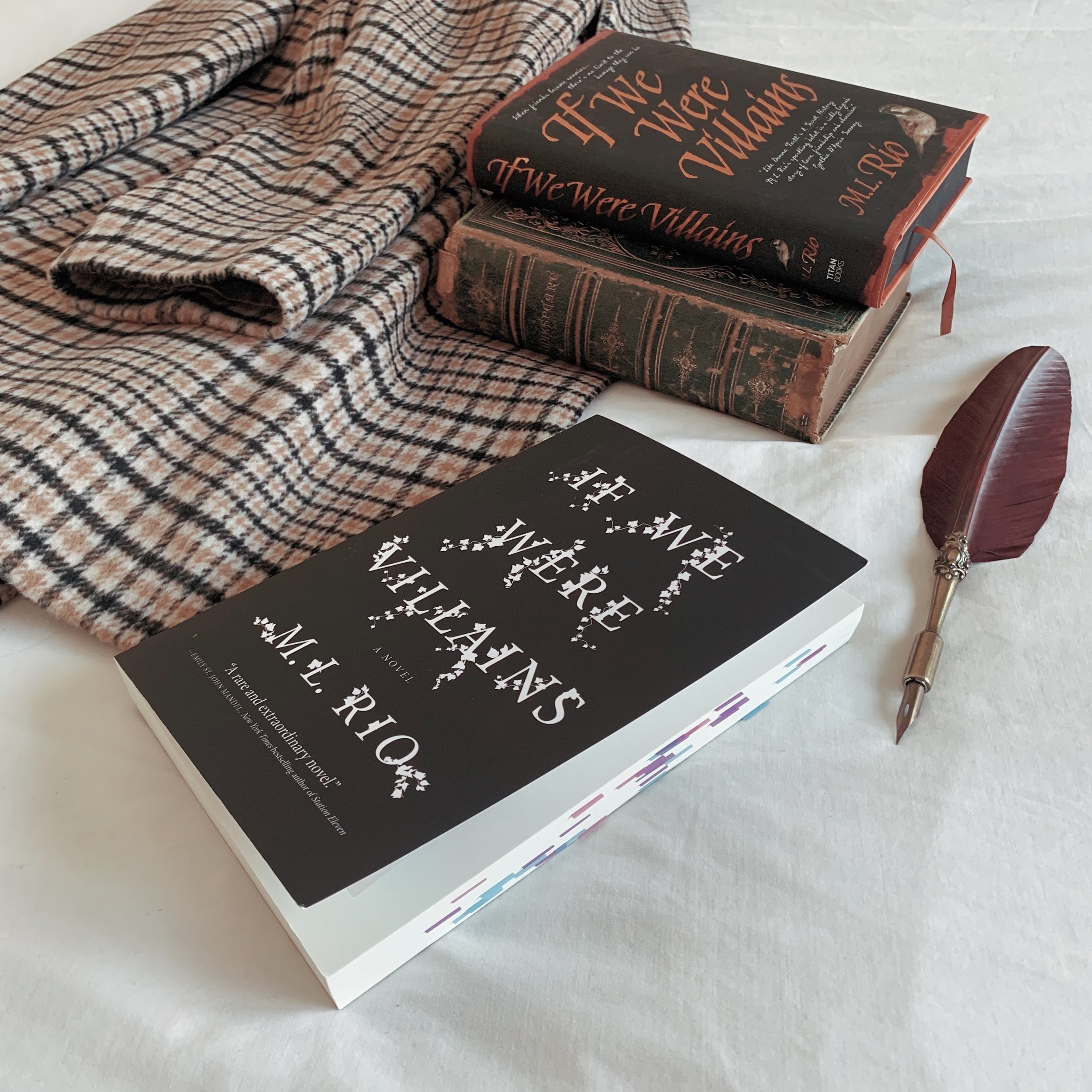
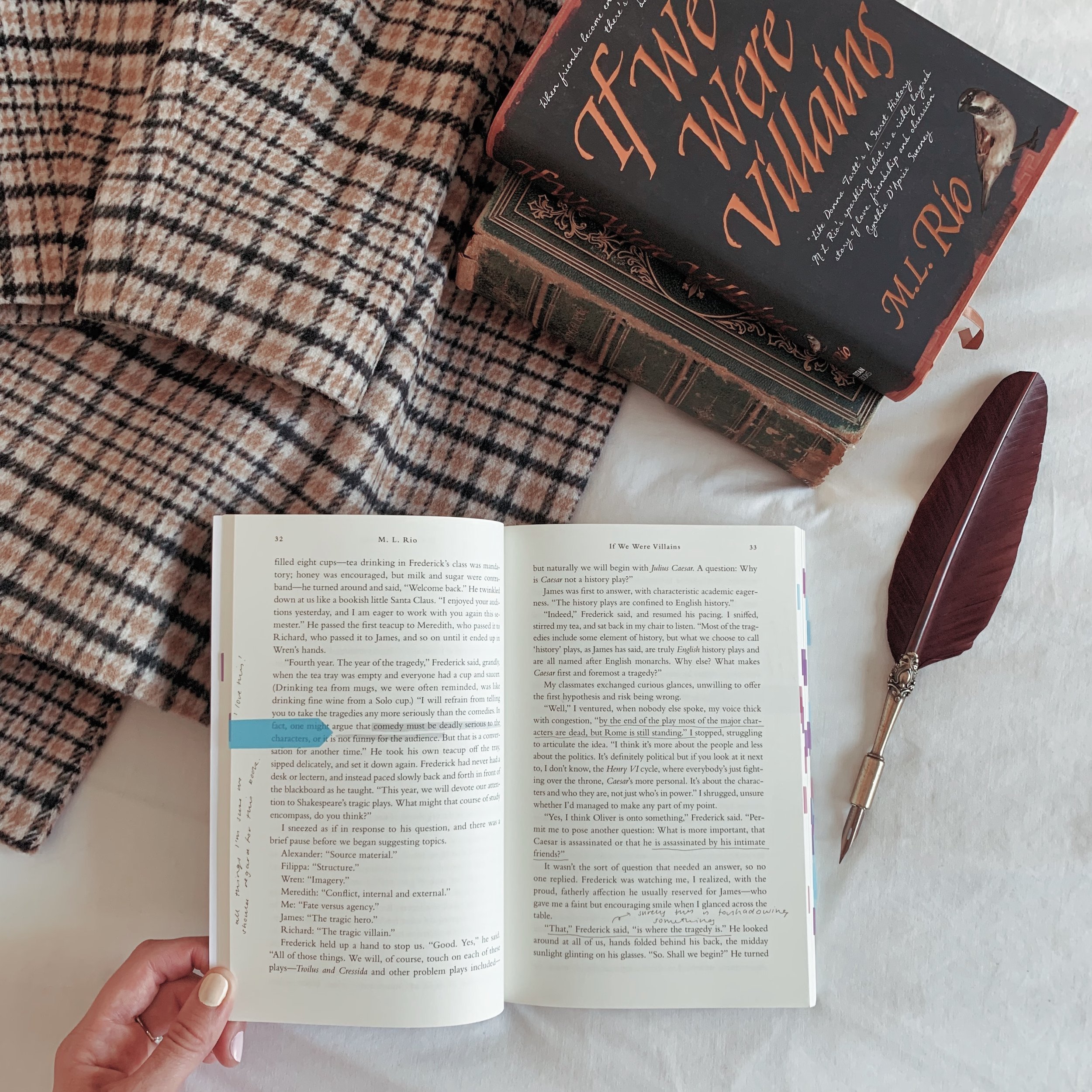
This month I finally got to If We Were Villains by M. L. Rio. This book was sold to me as The Secret History but with Shakespeare and actors instead of classical history students, and honestly, that is pretty much the vibe I got from this. Set at a prestigious arts academy called Dellecher If We Were Villains follows the seven fourth year Shakespeare students as their lives start to look like the tragedy plays they love so much, their lives intertwine with the plays they are studying, their language is one of their own devising their identities teeter between the world of the living and Shakespeares world. This book was brilliantly written and read like a play in more ways than one. The charters were loveable and despise able and all too real. If you love Shakespeare or The Secret History, stop putting it off and pick up this book!

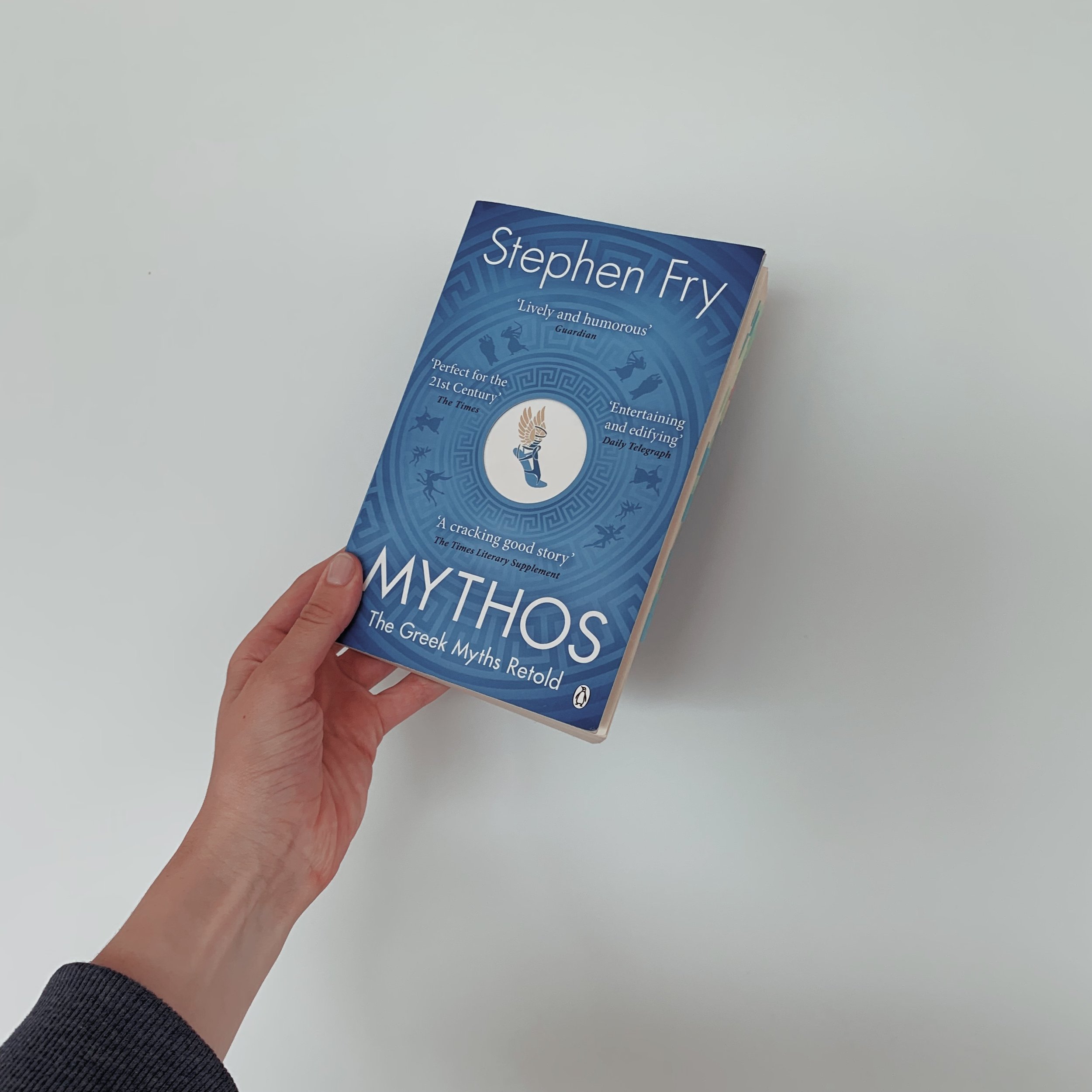
A hand holds up the paperback edition of Mythos by Stephen Fry against a white wall.

★★★★☆.5

The final book I finished this month was Mythos by Stephen Fry which was my answer to this prompt Crestfallenpages’ bookclub ‘a book thats been on your TBR for a really long time.’ I have been saying that I will read Mythos for years. I don’t even remember when I got it but I know it was ages and ages ago. I am so glad that I finally got it read! Especially since I really enjoyed it. Fry has such a way of telling stories thousands of years old as if they were new. Although I was familiar with many of the myths in this retelling, I still enjoyed it greatly, and his style of storytelling is hilarious. I laughed and snorted my way through this book with little dignity but tons of amusement. He definitely puts his own flare to these stories, he makes them easy to read, he adds dialogue but doesn’t lose the essence or the heart of these old tales. It would be a wonderful place for someone to start their Greek Mythology journey.

In February I am hoping to finally finish Assassin’s Quest by Robin Hobb which I have been putting off for months. I am definitely planning on reading Elodie Harper’s The House with the Golden Door, which is my most anticipated read of the year and which I was lucky enough to be given an ARC from Netgalley! I would also LOVE to finish Queens of Jerusalem by Katherine Pangonis and The Queen of Nothing audiobook by Holly Black.

Review: Mythos by Stephen Fry

★★★★☆.5 | paperback | book eight of 2022


Mythos: The Greek Myths Retold by Stephen Fry is his first book in his Great Mythology series and a book that has been physically on my shelf for years (probably since it came out in 2017). Stephen Fry has compiled the core myths from Greek mythology, beginning with the cosmogony or creation of the universe with the protogenoi or primordial god Chaos who was quickly followed by Gaia (Earth), Tartarus (the depths), Erebus (darkness), Nyx (night), Hemera (day) and Aether (light). Fry does a wonderful job conveying the beginning of existence, and then moves through the development of the world with the Titans, the Olympian gods, the nymphs, the lesser gods, and all other divine beings.

“The Greeks created gods that were in their image; warlike but creative, wise but ferocious, loving but jealous, tender but brutal, compassionate, but vengeful.”

Fry does an exceptional job at creating a somewhat linear narrative for all of these myths that were undoubtedly collected from numerous ancient sources and authors. After introducing our main gods and their stories, Fry takes us through many of Zeus’ conquests, stories of divine revenge and retribution, and popular stories featuring our Olympian gods. There are a lot of retellings in the world, but this one’s by far one of the most entertaining ones I have read. The thing about myths is that even in the ancient world, they were adapted and changed, so any colloquialisms and quips added into these stories by Fry is simply a continuation of a three-thousand-year long tradition. Fry comments at the end of his book that great ancient writers like Ovid took creative license to these stories, and this fact emboldened him to be as imaginative as he wanted in his retellings.

“Gaia visited her daughter Mnemosyne, who was busy being unpronounceable.”

Although there were a couple of comments and additions here and there that I didn’t exactly like/enjoy or didn't think were necessary, overall I greatly enjoyed Fry’s tone and writing style. He has re-written these stories in a lighthearted way, adding in dialogue and mannerisms that he thinks fit, but without losing the essence of the myth or the heart of the story. I would say that this compilation of myths would be a wonderful place to start for people looking to familiarise themselves with the gods of Greek mythology, but don’t want to dive into Hesiod or Pseudo-Apollodorus just yet. You will undoubtedly leave this book with a detailed overview of the foundation myths and beliefs of the Ancient Greeks, and you will definitely enjoy the ride. I was also pleasantly surprised by the number of footnotes about Greek myth in Shakespeare.

Have you read any of Stephen Fry’s Greek Mythology books? What did you think of this one? Let me know in the comments on Instagram!

Review: If We Were Villains by M. L. Rio

★★★★☆.5| paperback | book six of 2022


If Were Were Villains by M. L. Rio is an extraordinary novel set at a prestigious arts academy called Dellecher. Oliver Marks and his six fellow theatre students are going in to their fourth and final year at Dellecher, and that means they finally get to perform some Shakespearean tragedies. Little did they know that the rivalries, the violence and the tragedy of the plays they were studying would seep into their lives at school. Their fourth year would be their most crucial, and none of them would be left untouched by the goings on of their final year. Oliver and his classmates James, Richard, Alexander, Wren, Filippa and Meredith immerse themselves into the world of Shakespearean tragedy, and as they do their lives turn into a tragedy in ways they could never have foreseen.

The Water, too, was still, and I thought, what liars they are, the sky and the water. Still and calm and clear, like everything was fine. (79)

If We Were Villains is such an intricate, multi faceted read that there is no doubt I will get more from it when I inevitably re-read it in the future. This book made me homesick for a place I had never been, for friends I have never had. The seven main characters were just as unique as they were similar, speaking in a language so like our own, but so very different instead. Their complete infatuation of William Shakespeare, of poetry, of words, creates a whole new world that only they are living and we just get to witness it. After being completely immersed into the world of Shakespeare for three years, it’s no wonder that their roles in the plays have seeped into the real world, creating an intertwined story of fact and fiction.

Our sheer capacity for feeling got to be so unwieldy that we staggered under it, like Atlas with the weight of the world. (249)

This book has been written so beautifully, so thoughtfully. There isn’t a single word that doesn’t have a purpose. I think I was most delighted by the complete immersion of Shakespearean dialogue into the story, as if these characters relaying prose and verse was as easy as breathing. It is as if Rio doesn’t want you to be able to discern between performance and reality, she has often structured dialogue to physically look like you’re reading a play and often the characters seem to be liminal, caught between the characters they have played and the people they have become. This book is so intelligent, so all consuming, even if you aren’t a Shakespeare fan it would be hard not to enjoy or at the very least marvel over the construction of this tale.

For someone who loved words as much as I did, it was amazing how often they failed me. (211)

I would love to hear your thoughts about this book! Let me know whether you enjoyed it or not either in the comments or come and find me over on Instagram! ✨

Review: The Cruel Prince by Holly Black

★★★☆☆.5 | audiobook | book four of 2022


The Cruel Prince by Holly Black is the first book in The Folk of the Air series. The story revolves around a mortal girl named Jude who lives in the world of Faerie. When she and her twin was seven, her mother and father were killed in front of them by her mothers ex-fling and the father to their older half sister Vivienne. He was also a prominent general in the High Court of Faerie. Jude grows up as a mortal in faerie, taking classes with the rest of the faerie gentry. She sees mortals as slaves, drugged to work until exhaustion consumes their mind and body, not to mention the threats right in front of her with her faerie school fellows. As Jude fights for a spot at the High Court, she is consumed with intrigues and deceptions, trickery and bloodshed.

I’m going to be completely honest with you, I didn’t even read the blurb of this book before jumping into it. I was looking for a relatively easy read to listen to, and this one came with good recommendations. I definitely enjoyed the book but not as much as I was hoping I would. There was also something a bit weird about the narration, the volume kept fluctuating and there were some really obvious cuts in the recording, some of which I literally went back and had to listen to again to make sure I was hearing it right. That being said, the narrator did a really wonderful job.

This book starts off with a bang since their parents are literally killed in the prologue I’m pretty sure, but then nothing really happens until part two of the book. You don’t realise that the whole of Part One is basically not necessary until you get into the intensity of the second part. Jude wants to be a knight in the High Court, and her sister Taryn wants to marry a faerie, they’re both trying to fit into Faerie in different ways, but I found Jude’s character a little wishy washy. She didn't feel like a solidified character with purpose behind her actions until Part Two, when I actually started liking her. In contrast, Taryn acted exactly as I expected she would the whole time. I don’t love her character, but I guess she serves her purpose, as do many of the cruel faeries Jude comes into contact with during the course of the book.

I loved the political intrigue of the book, and how although some of it felt quite obvious, there were still events and choices that surprised me. There is a really great set of unique characters in this book which made it an overall enjoyable read, leaving you with the sense that you only know the surface of each of these characters. I have seen Cardan’s name everywhere on instagram, and so far he is definitely an intriguing character that obviously has a lot more going for him than just a drunk, broody, elite faerie who often acts cruelly (but I’m assuming thats just a front for how tortured he actually is). I really liked the rivalry and the ever brewing tension between Jude and Cardan, and I am sure this is only going to increase in intensity as I keep reading. Another part of this story I particularly liked is the Court of Shadows, and the level of intricacy in the intrigues and court politics. I hope these only grow in the next books.

I have a feeling this series is only going to improve with the next books and I am looking forward to starting the next one. Have you read this book / this series? Let me know your thoughts in the comments or over on my Instagram @kell_read

Goodbye 2021, Hello 2022

2021 seemed to go on forever, and then was suddenly over. It’s strange how that can happen. This time though, I know that I tried to live in the moment and enjoy the now as much as possible. There was a combination of good and bad this year, but one absolute good was the amount of time I got to spend reading, writing about books, talking about books and making friends through this new community.

2021 annotated reads

I launched this blog at the beginning of the year on a completely different platform, then I did a 180 and redid it. I am so glad I did because I am thrilled with how this little blog has grown and developed throughout the year. I have so enjoyed writing my reviews and recommendations and I hope you have enjoyed reading them. I appreciate every single one of you that has read my reviews, engaged with my content either here on on instagram and I am so humbled that people have actually trusted me and my recommendations, and purchased books based on my opinions. I truly hope that I have helped you find your next favourite read. Now, let’s get into what my 2021 looked like in books!

2021 reading

I used Notion to track my reading this year (along with Goodreads and I tried to use Literal and Storygraph but I just couldn’t be consistent with them all!) I loved using Notion for a personal and private way to track my reading, and it’s made it really easy to see my reading habits for the year!

My favourite reads of 2021 (not pictured is the Medoran Chronicles by Lynette Noni).

I read a total of 56 books this year which I am absolutely chuffed with! I was hoping to read 30 this year and I feel so great to have had so much time to read this year. I always like to make my reading goal something achievable, but even if I don’t reach it, if I only read a handful of books in a year I will still feel great that I got to read at all. For the first time, I really got into audiobooks, with 13 of my reads being audiobooks, and another 13 of my total being re-reads (I love rereading so much). Fantasy was definitely my most reached for genre this year with 37 of my reads being fantasy. I loved delving into historical fiction for the first time with 9 of my reads being historical fiction (I am planning on this number being much higher in 2022), and I also got to a few books I have been wanting to read for years, most notably the Iliad, the Odyssey, the Aeneid, Theogony and Works and Days and The Night Circus. I also surprised myself by reading 7 non-fiction reads, and I can see this number growing in 2022.

There were definitely many books I wanted to read but didn’t get around to (Stephen Fry’s Mythos, Heroes and Troy), and I bought so many new and exciting books that I have something for every mood. It’s hard to plan monthly tbrs when you’re a mood reader, but hopefully I’m in the mood to read lots of the books on my shelf this year!

2021 was also an incredible year in that I got the chance to talk to some amazing authors including Wendy Orr (technically December 2020 but I got to meet her in person in 2021 so it counts), Elodie Harper, Jennifer Saint, Garry Shaw, and Greg Woolf. Not to mention I made some phenomenal friends through this community from Melbourne and all around the world.

2022 goals

I have a couple of things in mind that I’d like to achieve / follow through with in this new year. One of them is limiting my book purchases. Unless its a highly anticipated release like Elodie Harper’s The House with the Golden Door or Jennifer Saint’s Elektra, or a book in a series I have already started reading, I am not planning on buying many books this year. I have so many amazing books on my shelf that I haven’t read, there really isn’t much excuse for me to spend more of my money on more books that I probably won’t read for a long time!

This year I want to tackle some of the books that have been sitting unread on my shelves for a long time, and I want to read much more non-fiction and historical fiction! 2021 was such a wonderful year for new historical fiction and mythology non-fiction releases, so 2022 will be the year that I actually read them. There are a few books I absolutely have to read including Metamorphoses, Stephen Fry’s Mythos, Heroes and Troy, The Starless Sea all of Natalie Hayne’s books, Divine, and The Trials of Apollo series just to name a few.

What is a book or author you really want to read in 2022? Let me know in the comments or find me over on instagram @kell_read