Review: Ariadne by Jennifer Saint

★★★★★ (Either 5 stars or 4.75… either way, this book was brilliant!) Head to the end of my review to find my interview with Jennifer Saint with World History Encyclopedia! After you’ve finished watching my interview with Jennifer, I would recommend you then head over to Erica’s YouTube channel MoanInc, where she has built off the questions I asked, and delved even deeper into the story with Jennifer which you can find here!

Ariadne by Jennifer Saint was a hugely anticipated read for me this year, even more so after I saw the beautiful cover art for both editions. So to say I was excited to read this one is an understatement, especially due to my obsession with Greek Mythology and women in the ancient world. I am very happy to say I was not disappointed. If you aren’t familiar with the myths of Ariadne, Phaedra, Theseus and the Minotaur, then this will spoil those for you. Since the book follows the myths very closely, this review details the core myths used in Ariadne, and then my thoughts on the book below will mention key points from the myth which will spoil it for you if you aren’t familiar with it!

Mythological Inspiration (this is a long one…)

IMG_1284.jpg

Let’s start with the mythology Ariadne is based off. As the title suggests, our main focus of the book is Ariadne, although I was pleasantly surprised that in Part Two and Three of the book (it’s split into four parts), we also get the point of view of Ariadne’s little sister Phaedra. Ariadne and Phaedra were daughters of King Minos of Crete, a son of Zeus, and his wife Pasiphäe who was a daughter of the Titan-god of the sun, Helios. When the ruler of Crete, Aseterion, died, the three sons of his wife Europa with Zeus; Minos, Sarpedon, and Rhadamanthus all wanted to be king. Minos claimed he had support from the gods to become king of Crete, and so he said that if he sacrificed and prayed to the gods for anything, they would fulfil the wish. So, Minos sacrificed to Poseidon and asked him to send a bull from the sea, and that if Poseidon did this, Minos would sacrifice the bull to the god. Poseidon sent the magnificent bull, and Minos’ claim was supported. However, when Minos saw the bull and how magnificent it was, he couldn’t bring himself to sacrifice it, and so he kept the bull for himself and sacrificed one of his regular bulls instead, in the hopes that he could trick Poseidon.

Your coronet will guide sailors to safety through the labyrinth of the treacherous seas. Women will look to it for a sing of comfort, a light in the darkness. Children will whisper their wishes to it before the close their eyes to dream. It will stay there, fast and true, for all time. (pg. 239)

Obviously, Poseidon knew exactly what Minos had done and so he plotted to punish Minos for his hubris. The punishment of Minos was done through his wife, Pasiphäe. In some accounts it’s enacted by Poseidon, in some it is by Aphrodite (or Venus in Roman texts) because Pasiphäe hadn’t shown the proper piety to the goddess, and in some Poseidon seeks the help of Aphrodite in the punishment. Whichever myth you read, it ends the same, Pasiphäe is sent an all consuming desire for the bull, and so she seeks the help of Daedalus the inventor. Daedalus constructs Pasiphäe a wooden cow covered in a real cow hide, and so she hid in the contraption and lay with the bull, since it thought that the wooden cow was real. From this union, Pasiphäe became pregnant with the Minotaur who was half human, half cow, and she named him Asterion.

The birth of the Minotaur brought shame to the family, and although Pasiphäe cared for it when it was younger, the Minotaur grew monstrous and ferocious, and his hunger was only satiated with human flesh. To hold the creature, Minos had Daedalus create the Labyrinth underneath the palatial centre at Knossos where the Minotaur lived. There was still the issue of how to keep the Minotaur fed, but after Minos’ son Androgeos was killed in Athens, Minos blamed the Athenians for his death and so requested 7 young boys and 7 young girls every nine years (or every year depending o the source), which he would feed to the Minotaur in punishment for the death of his son. In the third round of tributes, Theseus the prince of Athens volunteered as one of the tributes. When he arrived on Crete, both Ariadne and Phaedra fell in love with Theseus, and so Ariadne sought out Daedalus to help save Theseus. Ariadne gave Theseus a ball of string so that he could find his way out of the Labyrinth. Theseus successfully killed the Minotaur, and then left Crete with Ariadne and Phaedra. On the way home, Theseus abandons Ariadne on the island of Naxos, and takes Phaedra as his wife. Ariadne becomes the wife of Dionysus, and Phaedra becomes the Queen of Athens until she falls in love with her stepson Hippolytus, which does not end well for either her or the youth.

So there you have it, the most condensed version of the myth I could possibly write. If you want a more in-depth article about the myth, check out World History Encyclopedia’s article on The Minotaur!

… but also by the terrible truth that she had sacrificed everything she knew for a love as ephemeral and transient as the rainbows that glimmered through the sea spray. (pg. 1)

Thoughts and Feelings

tempImageH1x64u.gif

I have been finding it hard to put my thoughts about this book into coherent sentences, so much so that I’ve taken a few days since finishing it to let it settle before sitting down to write this review. Let’s start off with some general thoughts on Ariadne. The first thing that struck me when reading this book was the writing, it’s absolutely beautiful. Saint’s writing style is lyrical and poetic, and it has given me the same feeling as Madeline Miller’s Circe. The amount of tabs I used for this book is just insane, and it was primarily so I could go back to the sentences that were so beautiful and striking. I thought the descriptive language lended itself well to the story, as it is quite a slow burn. If you are looking for action, then this is not the book for you. I would have liked a little bit more dialogue to help the story move a bit, but when we did get dialogue, Saint made it count. It strikes me as very similar to Greek Tragedy in the sense that any action or violence is never shown, but rather told. You don’t actually read about Theseus killing the Minotaur, but when he exits the labyrinth with the other tributes, you know that a bloody fight has just occurred.

I know that human life shines more brightly because it is but a shimmering candle against an eternity of darkness and it can be extinguished with the faintest breeze. (pg. 229)

The book is split into four parts; the first and fourth part are from Ariadne’s point of view, and in parts two and three, we get both Ariadne and Phaedra’s point of view. Having dual perspectives in this novel was such a brilliant way to tell this story, especially since Phaedra essentially lived the life Ariadne dreamed for herself, the second she locked eyes with Theseus. This book was full of hints to the long history of Greek epic poetry, such as the reuse of epithets commonly seen in Homer’s Iliad and Odyssey. My favourite, and one that popped up a lot was ‘rosy-fingered dawn,’ which could be found rewritten numerous time in ways such as ‘the rosy fingers of dawn’ (15). You also have the bee pendant given to Ariadne from Daedalus, which can only be inspired by the Minoan gold bee pendant found in the site of Malia on Crete, as well as mentions of the labrys, also known as a double axe which is a very common symbol and artefact found in Minoan sites and contexts. Any time an author intertwines archaeological aspects into a retelling or reimagining of a myth, I automatically like it more.

One very prevalent theme throughout this retelling is the inherent unfairness there was in being a woman in the world of the gods, and in Ancient Greece in general. Furthermore, this idea of women being punished for the actions of men is commented on by Ariadne as early as page 15 with her thought ‘however blameless a life we led, the passions and the greed of men could bring us to ruin, and there was nothing we could do.’ The myths of women such as Scylla who betrayed her father to help Minos, and who was then killed by Minos for her treachery, of Io who was turned into a cow to ‘save’ her from Hera’s wrath after she slept with Zeus, of Semele who was tricked by Hera into forcing Zeus to show her his divine self which then promptly killed her, of Medusa who was turned into a monster with snakes for hair and a look which could kill after being raped by Poseidon, were all brought up time and again in this book, as an emphasis of how women were punished for the follies of men, and I wish Ariadne learnt from these stories. Of course, the myth had to play out, but by having those myths mentioned throughout the story makes it all the more clear how helpless the lives of women were.

I wondered what it felt like; to command the respect of people who had not seen you for years and knew nothing of you except that you were the son, rather than the daughter, of the King. (Phaedra, pg. 152)

This book was very character driven, and I was loving every minute of it. We pretty much get the entire life of Ariadne and Phaedra from their childhood until the day they die in 386 pages, so naturally, their development and growth was a huge part of the narrative. Ariadne was always quite self aware, she knew the consequence of her actions, but she was so naive to assume that everyone else (ahem, Theseus), was as trustworthy as she was. Her character fluctuated between being a relatively naive woman who let things happen to her, to being this strong, courageous woman who did what she wanted for herself. The inconstancies of her character made her all the more human to me, and a loved reading through her life, and the ways which Saint interpreted her life on Naxos with her children and the Maenads. Having the dual perspective of Ariadne and Phaedra was such a great way to show the contrasting lives of the sisters, and how they grew up so differently. The most striking contrast for me was the way in which the two women dealt with becoming mothers and their feelings towards their children. It was haunting, and their different experiences has really stuck with me. This is similar to their relationships with their husbands, Dionysus and Theseus. Dionysus is the god of wine, and the fact that he is a god and has married a mortal is your first sign that this cannot stay so perfect. His development was one of my favourite parts of this book, it was so intriguing to read how the following of mortals in his rites affected him, and consequently his relationship with Ariadne and their children. In contrast, Phaedra and Theseus were never in love, and Phaedra lived a lonely existence as the Queen of Athens. Being in her head as she meets this innocent, pure and outwardly kind man, Hippolytus, really casts her story with Hippolytus in a different light than what we get from primary sources. It was fascinating and tragic, and I loved it. This brings me to Theseus, the opposite to Hippolytus in every way possible. He was obsessed with being a hero, and so I thought that the early description of his ‘cold green eyes’ hints to his cold and cunning soul. He doesn’t care for anyone other than himself, and his lies and manipulation was all calculated and without a second thought for anyone else’s feelings, but only for how it would help him become a greater hero. I really liked the way he was portrayed in this book, but I have a feeling that might change after reading some primary sources of the myth of Ariadne and Theseus.

I will be coming back to this review after I have read 1. The Library of Greek Mythology (also known as the Bibliotheca) by Apollodorus and 2. Plutarch’s Parallel Lives: Comparison of Theseus and Romulus because I’m interested to see how my opinions change about the character of Theseus and Ariadne after reading a couple of primary sources on him. I am also having an interview with Jennifer Saint which I am so excited about, so after I have published that video, I’ll be sure to link it here so you can check that out! The transcription of my interview with Jennifer has been posted to World History Encyclopedia which you can read here! Have you read Ariadne? I would love to hear your thoughts on it either in the comments or find me over on Instagram @kell_read!
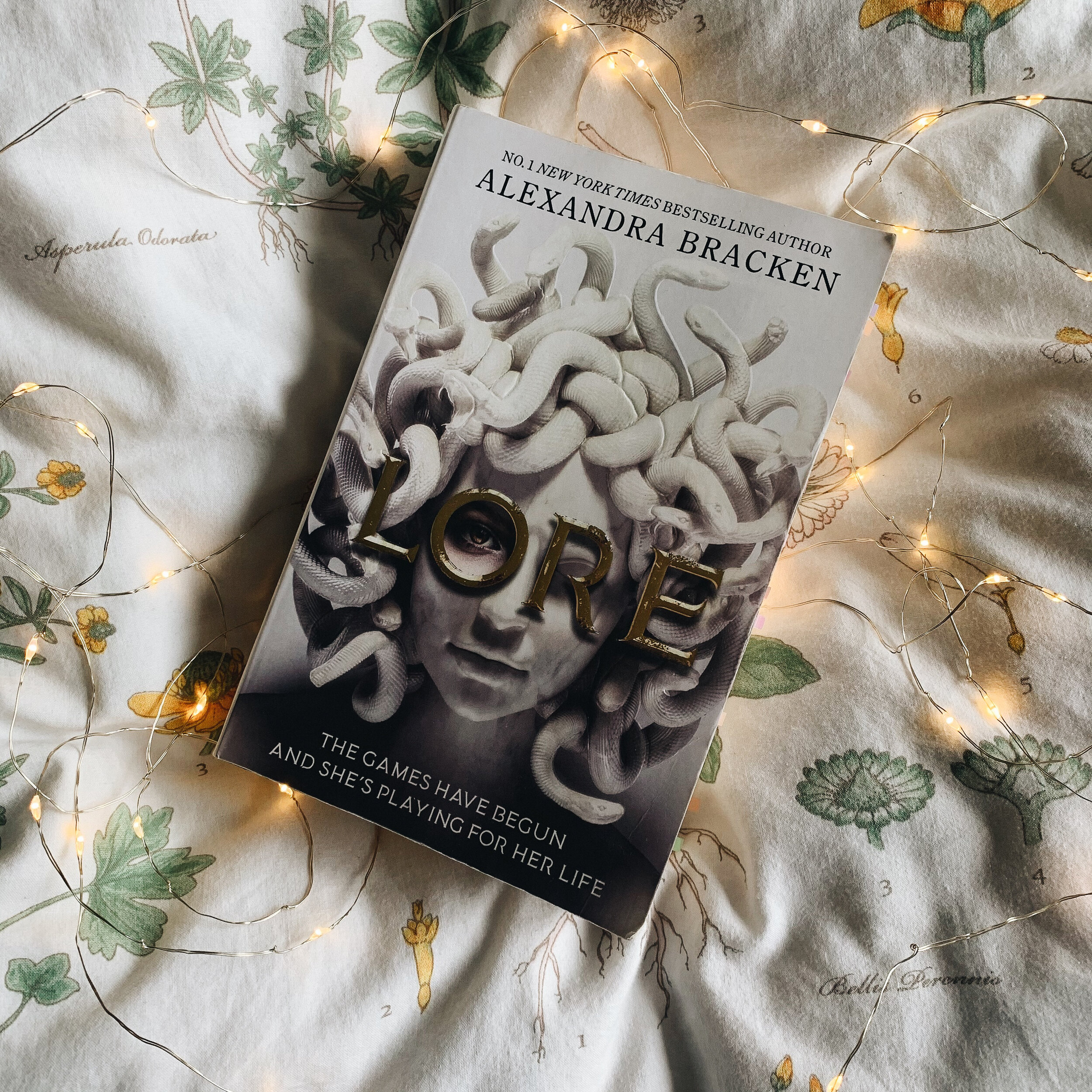
Review: Lore by Alexandra Bracken

★★★★☆

Lore by Alexandra Bracken was described to me as a Greek Mythology x Hunger Games vibe, and honestly, after reading it, I agree wholeheartedly. Every seven years, nine of the 12 Olympians are turned mortal and sent to earth for one week, in an event called the Agon. During the Agon, the mortal bloodlines of infamous Greek heroes such as Perseus, Odysseus, and Achilles hunt the gods, and if they kill one, they assume the gods’ immortality and power. Lore Perseous left that life many years ago, but when her friend Castor (whom she assumed was dead) and a gravely injured Athena both turn up in her life at the beginning of the Agon, she is thrust back into the world she truly hoped she had left for good.

FullSizeRender 5.jpg

I always find it easier to talk about things that I didn’t like (I don’t know why that is), but for this book, there was only a couple of things, so let’s start with them! The first was the writing itself, every now and then Bracken would write something like ‘half-past eleven o’clock,’ and I feel like the ‘o’clock’ just feels off-kilter. Also, there were a number of instances where I had to re-read a sentence because the phrasing just didn’t make any sense to me. I would also say that it’s quite a long book (my edition is 547 pages), but it only covers 7 days in total (although there are flashbacks throughout the story). I had a recommendation from Erica that it isn’t a book you can draw out, it’s best read in as little sittings as possible, and honestly, I agree! I read the first 270 pages in around three weeks, and the last 270 pages in about 5 hours, and I enjoyed the second half of the book more than I enjoyed the first half! I would have LOVED more to do with the new gods, I feel like they could have taken more space in this story than they did. I also feel like this book could have been improved with multiple points of view (although to be fair, I think this about most books I read that are only a single POV). Reading parts of this from the eyes of someone like Miles who is ‘unblooded’ and just thrust into this world, or Castor who goes through such an incredible arc could have added a bit more substance into the world building and the Agon.

‘It was a morbid sort of marathon relay, with immortal power as the baton being passed between bloodlines.’ 

Alexandra Bracken

Okay, on to all of the good stuff!! This book was so action-packed, but it never felt overwhelming. This was such a fresh and unique way of bringing Greek gods and Greek mythology into an urban setting, which actually took me a bit to get used to. The idea that the gods could be killed, and then when a human took their powers they also chose a new name for themselves and would be referred to as ‘the new Dionysus’ for example is so different from any other book I’ve read. I loved the fact that Bracken kept this story in the world we know, and if you were from New York, I can only assume that the places and street names mentioned would have been very familiar!

I think one of the things that really struck me was the bloodlines, and their beliefs. These groups of people are all descendants of these ancient heroes, heroes that we would be familiar with, but they’re living in the world we know today. They descend from these great heroes and they believe in the Greek gods, yet their religious practices and social order barely altered in over 2,000 years. I found the contrast between these families believing in archaic systems of men basically owning women, and prohibiting women to be heads of the family or in any position of power, with the modern world which is working SO HARD to disestablish these ideas to be pretty shocking. There is this one scene in one of the flashbacks that literally made my skin crawl. the inequality between men and women that we are still fighting today has been an integrated part of societies for as long as history traces back. We are aware of the lack of choice, of voice, and of freedom that women were given in most (not all) ancient societies and no one today pretends that the way ancient societies functioned wasn’t inherently misogynistic. But reading these antiquated beliefs functioning in the modern world, with most of the characters accepting it because ‘that’s the way their world is’ was much harder than I thought it would be.

‘she was merely reborn as a being who could gaze back at the world, unafraid’

Alexandra Bracken

The occasional banter in this book was such a highlight, plus the way the main characters Lore, Castor, Miles, and Van all converged in a very cute, found family sort of way. The way the four of them all worked together, and worked to each other’s strengths was a dynamic in this story which I really, really enjoyed. Although, I was never really sold on Lore’s friendship with Iro. I just didn’t feel the depth of their relationship like I did with her and Miles, Castor, and even Van. Having Athena as the main god that Lore interacts with was such an interesting choice, one that I really liked. Athena is the goddess of strategic warfare, wisdom, crafts, and defender of cities and towns. Many of her responsibilities lend themselves to the story which played out in Lore, and I thought she was the perfect choice. I thought the character of Lore was so multi-faceted and three-dimensional. Her constant battle between avenging her family, her guilt, her need for survival, her desire for a normal life, and her inability to forget who she is and who she was brought up to be makes this book even more interesting. Reading from the point of view of a character so conflicted was so compelling, and one of the best parts of this book.

“Sometimes the braver thing is to accept help when you've been made to believe you shouldn't need it.”

Alexandra Bracken

At one point, Lore brings up Athena’s history and her tendency to give her favour to male heroes, and, using the example of Medusa, her history of turning her back on women. This was another moment for me where the issues of Greek Mythology came rushing back in stark contrast to the modern world. The story of Medusa isn’t often depicted as a happy one. The beautiful Medusa (one of the three gorgons) was seduced by the god of the oceans, earthquakes, and horses, Poseidon, in a temple to Athena. In retaliation for desecrating her temple, instead of punishing Poseidon, she turned Medusa into a monster with snakes for hair and the ability to turn people to stone with one look. The face of Medusa was depicted on Athena’s shield, known as an Aegis, and is the symbol of the House of Perseus (Lore’s bloodline). The plotlines, character motivations and underlying mythological background interwoven throughout this book keeps you constantly on your toes as more information is revealed. It is an intricate balance of modern life, ancient beliefs, and an epic hunt, and Bracken executed it brilliantly. If you want a book that brings ancient myths, gods, and beliefs into an urban setting like you’ve never seen it before, this is the book for you. If you’ve read it, let me know your thoughts in the comments, or you can find me on Instagram at @kell_read!

Review: A Touch of Ruin by Scarlett St. Clair

★★★★☆

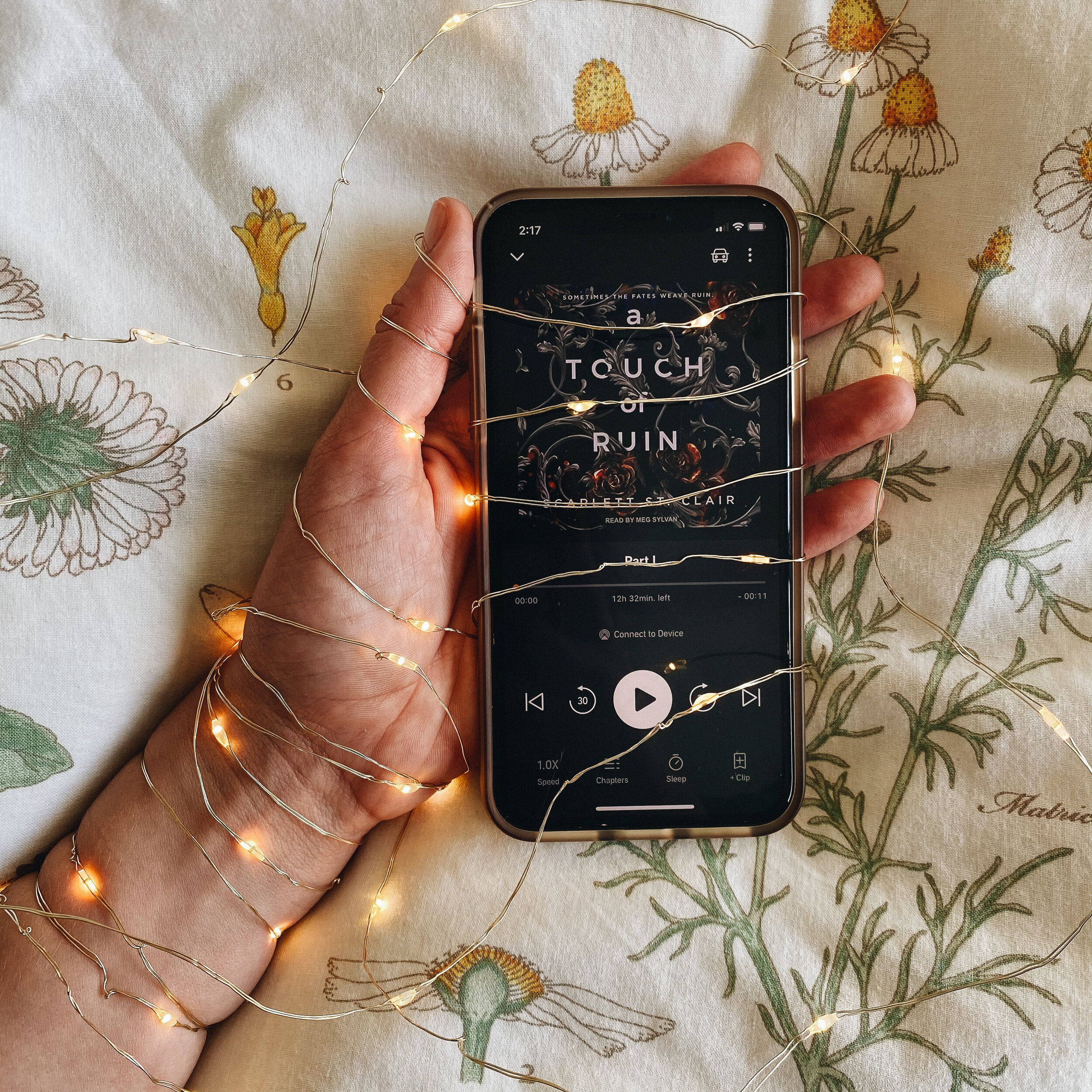
A Touch of Ruin is book 2 in the Hades and Persephone series by Scarlett St. Clair, and, once again, I listened to the audiobook. This time though, I listened to it at 1.2x speed and it was SO MUCH better! The narrator drawled less, and it seemed like there was more enthusiasm in her narration. Whether it’s due to the fact that I sped it up, or if she was just better this time I’m not sure, but if you decide to listen to the audiobook, definitely speed it up! I have been really enjoying listening to books, it’s easy to make notes and the emotion and extra layer of performance you get is so wonderful. Another point here is that this book is written SO WELL! I love the writing style and I would recommend this series to everyone!

IMG_0743.jpg

Much like book 1, I still have VERY conflicting emotions with this book (and series). In saying that, this book and whole series so far is incredibly binge-worthy and addictive and I am mildly obsessed with this series 😍 I was hoping that after the events of book one, Persephone would begin to grow as a person, to trust Hades, and continue to improve her communication skills with the man she claims to love. I hoped to see her healing from her mothers’ treatment of her, and growing into her newfound power and position next to Hades. What I got instead was an increasingly annoying, stupid, bratty, and insecure Persephone, who seemed to learn absolutely nothing from the events of Book 1. I can understand the insecurity she continues to feel, she was locked up by her mother for so long, and was taught to believe that she had to work hard for love and affection, and if she did something wrong it would be taken away. I understand how this can mess with a person, but this doesn’t have to make a person PLAIN STUPID?

“The first rule of men, Persephone, is that they’re all idiots.”

Scarlett St. Clair

In the last, maybe 2 chapters did I begin to actually warm to Persephone, but I don’t think she actually learned from any of her mistakes?? (And there were A LOT she could have learned from). I think she feels guilty and feels remorse, but I also think she still feels bad for herself more than actually learning from the mistakes she has made. This brings me to the question of why Hades deals with her? I know that they’re fated to be together blah blah, but they’re both immortal? Why not let her grow up a bit rather than dealing with her absolute crap. Persephone uses 98% of this book to lie to Hades, break the multiple promises she has made to him, and then wonder why he leaves her to her own space? She never gives him the chance to explain himself, and although he makes mistakes, at least he is trying? He has MILLENIA of habits he needs to unlearn, and the fact that Persephone expects him to be perfect within months of meeting is so selfish and self-absorbed. I was really hoping their communication would improve in this one, and that’s one more thing that I didn’t get. I got more weird, passive-aggressive sex scenes and arguments that were never resolved. However, every time Hades asks Persephone if she is well makes my heart melt.

I definitely don’t agree with Jaison’s treatment of Persephone though. Yes, he is Lexa’s boyfriend, but Persephone has been best friends with her for YEARS, and the fact that Jaison is Lexa’s significant other does NOT undermine the relationship between the friends. Like, I’m sorry but his attitude was atrocious and I’m pretty sure he never apologised. I also found this subplot (or actual plot?) quite out of place. This leads me to the issue of the plot? Where was it? Someone tell me where it was, because I have no idea. There was a lot of sex, and there was a lot of brooding and whining but not a lot of actual events or communication. There were a bunch of subplots that I felt were left open, but probably not important enough to be resolved in the next book, and the fact that at one point, Helen was left in the lobby waiting for Persophne and then never mentioned again? I don’t vibe.

“Create the life you want, Persephone, and stop listening to everyone else.”

Scarlett St. Clair

What I DO vibe with, is pretty much all of the secondary characters; Hermes, Hecate, Sybil, Thanatos, and even Apollo. In the beginning, as I’m sure that St. Clair wanted, I felt for Sybil and hated Apollo. Throughout the course of Persephone writing slanderous articles about a god after being specifically asked not to (???), Apollo started to grow on me. I’m not completely sold on the fact that after millennia of being a god and acting how he has, Persephone does like, three things, and Apollo decides he wants to change? But, apart from this, he started to grow on me. Hermes is still 100% my favourite character in this book, he is the sassy comedic relief we really need in this book after pages and pages of constant whining and literally NOTHING HAPPENING. We definitely didn’t get enough of Hecate in this one (thanks to Persephone being so stubborn and ignoring the underworld altogether).

So, with another chaotic review completed, it is safe to say that I will keep reading this series and I TRULY hope that Persephone is redeemed in the next one. Keeping this review non-spoiler was so difficult, especially due to the number of random small subplots sprinkled through the chaotic book (that’s right, I reckon my review and this whole book are both chaotic). I got 2 chapters of bonus content at the end of the audiobook from Hades’ point of view, and I want to read the series from his POV SO BAD! I’ve enjoyed the three chapters I’ve been blessed in his point of view more than I’ve enjoyed most of this book in Persephone’s. If you’ve read this book, what are your thoughts? Did you like it more than book one? Let me know here, or find me over at @kell_read on Instagram!

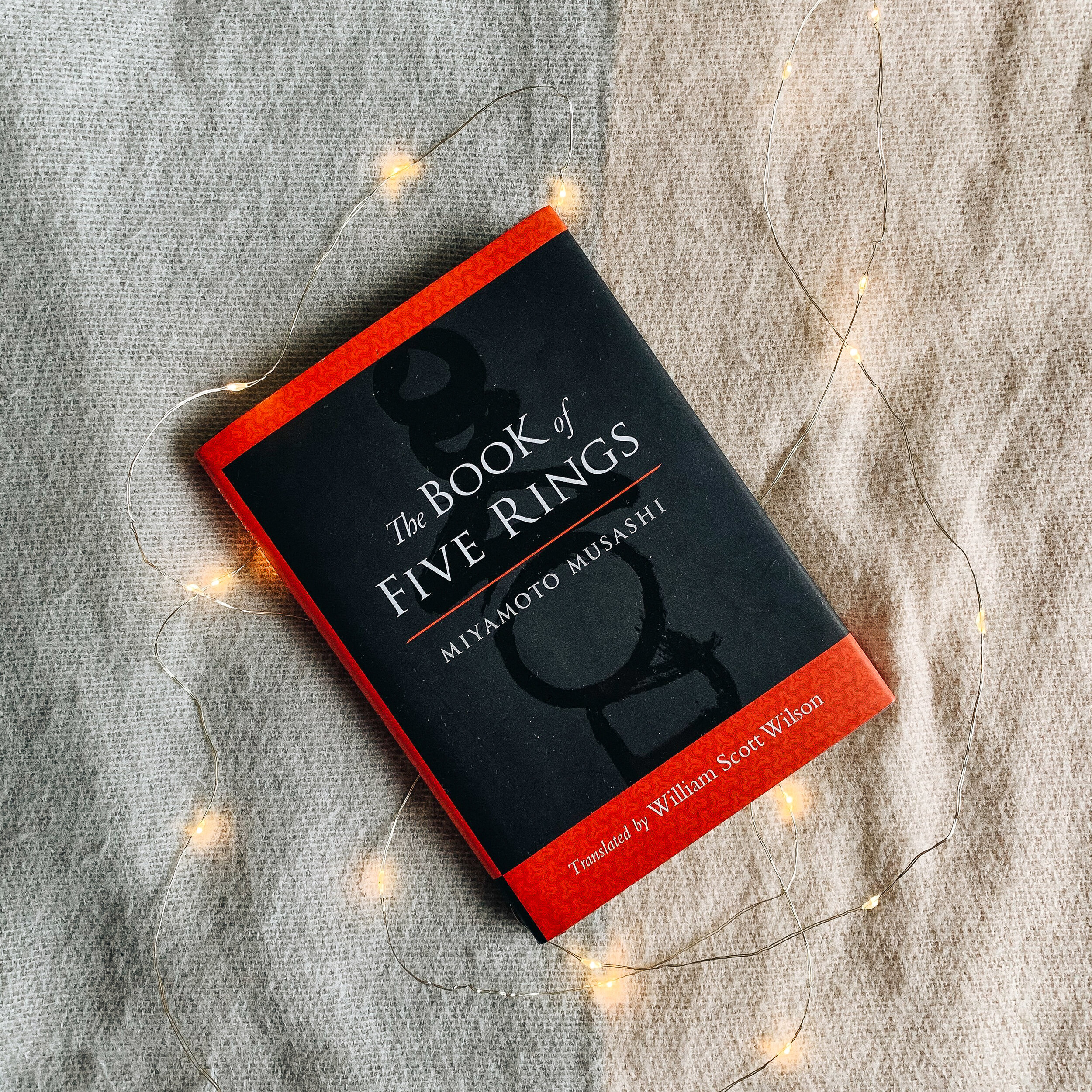
Review: The Book of Five Rings by Miyamoto Musashi (Translated by William Scott Wilson)

★★★☆☆.5

The Book of Five Rings (translated by William Scott Wilson) is a manifesto written by the undefeated Samurai Miyamoto Musashi. Born in either the Harima Province of Japan or the small village Miyamoto in Mimasaka in 1584, Musashi won his first fight against the swordsman Arima Kihei at just 13 years old. Other than the small amount of information he writes about himself, (literally half a page in his book), everything else we know of this incredibly successful samurai has been pieced together from bits of sources here and there. At the age of 62, in 1645 Musashi died as an undefeated warrior, and not long before his death, he wrote down his Ways. 

FullSizeRender 20-2.jpg

The Book of Five Rings, detailing Musashi’s beliefs and practices of his Way of Truth. The book is really easy to read, and accompanied by an insightful introduction and a great bibliography at the end. Coming into this with no prior information about Japanese samurai culture didn’t feel like a disadvantage after reading the introduction, and the accessible way in which it has been written. It can be understood as Musashi’s guide book on how to be a successful samurai, and hints many times at the things he thinks you should research more thoroughly, or practice consistently. 

The book is split up into five sections ‘The Earth Chapter’ ‘The Water Chapter’ ‘The Fire Chapter’ ‘The Wind Chapter’ and ‘The Emptiness Chapter,’ and each deals with a separate facet of Musashi’s practice and beliefs, known as his ‘Way’. Chapter one is the Earth Chapter and is an introduction into Musashi’s Way, and give an overview of what he is going to cover in the next four chapters. Chapter two is the Water Chapter, which uses water as a model for the mind, and focusses on the swordsmanship of his Way. Musashi detail practical knowledge and tips to holding and handling swods, specifically in his preferred style of the ‘Two-Sword Style. Of course, he takes the time to tell you why his style is the correct one, and why any other style is inferior. Musashi runs through a number of different scenarios and the ways in which you can defeat your opponent. He also stresses the importance of the mind and the body; specifically, the eyes, hands, feet, head, neck, and posture when learning the Ways. The use of a sword is a full-body experience.

"You should consider these principles as though they were discovered from your own mind, and continually make great efforts to make them a physical part of yourself."

Miyamoto Musashi

The Fire Chapter is chapter three, and in this section, he uses fire as an analogy for battle since, like fire, battles can be small or large. This section focusses on the use of your mind in every situation to your advantage. This is also the section in which he explains ways you can use your physical surroundings to your advantage. Where the best place to stand is in regards to the light source, and the strategies to keep in mind when fighting. This is also the section that focusses more on issues that may arise during battles, and different tactics to gain the upper hand, like using fear to your advantage, and working with the rhythm of your opponent. The Wind Chapter is pretty much all about why the other ways of martial arts are wrong, and why his is superior. And finally, The Emptiness Chapter (which is the shortest chapter) was written: "so that you might naturally enter the Way of Truth.”

“Fear resides in all things, and the great of fear is in the unexpected”

Miyamoto Musashi

This book was a VERY interesting read. As I was getting into the rhythm of the writing style and the content of the manifesto, I started to make comparisons to how you can use his rules and tips in your everyday life. One of the sections that resonated with me was ‘Renewel’ in which Musashi writes ‘when you and your opponent are fighting and nothing is going right, nor is there progress, be of mind to throw off your former intention and start entirely anew.’ When I read this I thought of the times that I got in the way of myself, and how switching up a routine or starting something anew after being stuck in a lull gave me a fresh perspective and renewed energy or enthusiasm for a project or task. If you are going to read this, keep an open mind and try and see how you might be able to use some of Musashi’s tips in your own life.

This was a bit of a different read for me, but still really enjoyable! Let me know if you’ve read this, or something similar, or if you have knowledge of the history of samurai’s in Japan! I would love to learn more about this history!

Review: A Touch of Darkness by Scarlett St. Clair

★★★☆☆.75

A Touch of Darkness is the first book in the Hades and Persephone series by Scarlett St. Clair. It’s a loose retelling of the abduction of Persephone by the Lord of the Underworld in Greek Mythology, re-written in an urban, contemporary setting. I listened to the audiobook, which I wouldn’t necessarily recommend because I didn’t really vibe with the narrator, but the story definitely has its merits!

IMG_0445.jpg

This book is definitely an easy read. It’s addictive and binge-worthy, and I raced through it in 4 days. The story follows Persephone, the Goddess of Spring who has been hidden from the rest of the gods by her mother Demeter, the Goddess of Vegetation. She has been allowed to leave the confines of Demeter’s greenhouse to attend university and live a normal life glamoured as a mortal, and has been brought up being told to stay away from the gods, especially Hades. This book covers just over 6 months, and Persephone doesn't just ~not~ stay away from gods, she ends up becoming very acquainted with many! St. Clair has made many changes to the initial myth to make it work for her story and her setting, and honestly, I was SO here for it!

Even knowing the myth of Persephone and Hades, this book is filled with imagination and I really enjoyed the urban setting (although it took me a bit to get used to). The biggest issue I had with this book was Persephone. Honestly, most of the notes I made whilst reading this book was just my frustration over the Goddess of Spring. One of the biggest issues I had with her was her inconsistent and wishy-washy personality. I understand that this is a character who has only been allowed into the real world for the last four years, but she was constantly contradicting herself, and just not making a lot of sense. Persephone’s character seems to have been written purposefully to aid in the whole ‘miscommunication’ trope, but instead of actually having issues of miscommunication, she just doesn’t tell Hades anything? Some of the things she thinks were just so DUMB, she was sometimes so self-absorbed, and she seemed to actively listen and believe everyone else (including gods she’s just met), over Hades, and it makes absolutely no sense.

“Oh, darling”

Scarlett St. Clair

Anyway, she was honestly my biggest problem with this book. Her, and the ‘insta love’ vibe I got. However, with the insta love, that is definitely stemming from the roots of Greek Mythology so that, I accept begrudgingly. What I LOVED about this book was Hades, Hecate, literally everyone that works for Hades and the Underworld. Getting to slowly see how Hades lives his life, find out what makes him happy, and who he is as a person behind all of the garbage nonsense that is spread around was my favourite part of this book. He withdrew from the public eye for thousands of years, and so, in his wake, rumours and gossip grew and mutated into nothing but lies about his character, and his motives. And the thing is, the reader can see this from the first encounter between Persephone and Hades, but it still takes Persephone, like, the WHOLE DAMN BOOK to get with the program. *sigh*

“If they feel you’re worthy of celebration, don’t you think that’s enough?”

Scarlett St. Clair

Hecate, the souls in the underworld, and all the gods that are portrayed in this book were so wonderful! I thought Hermes was so brilliant, and Thanatos made such an impact, even though he was only in it for a short time. The friendship that grows between Hecate and Persephone was brilliant, almost as heartwarming and Lexa and how unconditionally she loves her friend! Definitely an underrated character. This book was also VERY steamy. Like, surprisingly so. This is your warning 😂 If you want to know more about Scarlett’s research, inspirations and development of the book, then I would definitely recommend you watch Erica’s interview(s) with her over on Youtube!

So, if you’re looking for an easy read, steamy, greek mythology retelling, then this is definitely the book for you! I got so much more invested in the relationship than I was anticipating (obviously because of Hades), and I am so excited to continue on with the series. You’ll also find many, many tidbits from Greek mythology all throughout the book including common names and other myths! I love it when authors incorporate as many references and nuances as possible! In saying that, I’m definitely more excited to read the Hades perspective than the Persephone. Have you read this book? Which perspective do you prefer?

Review: A Kingdom of Flesh and Fire by Jennifer L. Armentrout

★★★☆☆.5

A Kingdom of Flesh and Fire is the second book in the Blood and Ash series by Jennifer L. Armentrout. This is going to be a spoiler-free review for this book, but will definitely spoil the first book in the series so if you haven’t read the first one, then pls don’t read this if you don’t want to be spoiled!


Okay! On to the review! So at the ending of the previous book, we found out that Hawke isn’t just Hawke, but is actually Casteel Da’Neer, the Prince of Atlantia, also known as the Dark One. If you haven’t already read my review for From Blood and Ash which explains my chaotic thoughts about that book, you can find it here. Honestly, this one started off just as problematic. There were a few things I liked about this book, and a few things that really, really bugged me. The way Casteel acted, his manipulative behaviour was toxic and made me feel so uncomfortable, and a lot of those feelings followed me throughout the first third of this book too. The way he acts is possessive in a way that isn’t hot and broody but uncomfortable and NOT my vibe. He definitely grew on me as the book continued past the first third and we actually learnt more about him, but I can’t forget the way he acted in the way that apparently Poppy can.

You can’t spell dysfunctional without fun, now can you?
— Jennifer L. Armentrout
IMG_0157.jpg

This takes me to the utter lack of communication between Cas and Poppy for LITERALLY 90% of this book. It took them SO LONG to deal with their OBVIOUS attraction and it really bugged me. I definitely understand why it would be a serious conflict for Poppy, this man literally lied about who he was for months, but really. Poppy’s internal monologues were too frequent and so incredibly pointless. They were all so repetitive, and at the end of it all, nothing is ever resolved for her. It bugged me, and she bugged me. Plus, their constant referencing to ‘pretending’ was so frustrating.

A common theme in this review is that, after the first 60%, everything about this book got better. Since in the first 60% literally, nothing happened and the dialogue was so repetitive. There were significantly fewer internal monologues, things actually happened, and the introduction of more characters which really improved this book. I loved learning more about Atlantia, the history of the world in this book and the Atlantians in general. But, I would have LOVED to have learnt this information another way, rather than a massive info dump question and answer. It wasn’t at all engaging, and I feel like there was SO much potential and it just fell flat.

Make me feel incompetent and kill more than me, Princess.

Jennifer L. Armentrout

One of the saving graces in the book was Kieran and the dynamic between him, Casteel, and Poppy. I honestly wanted more Kieran! I better get more Kieran in the next book. Their relationship really developed as the book went on, and I was SO here for it. Poppy became so comfortable with the two boys, and the banter between them was honestly a lifesaver in some of the more dull sections of this book, since, and I STRESS, barely ANYTHING happens in this book. The major events that did happen were brilliant, the fight scenes were well written and the dialogue that wasn’t about Poppy and how special or violent she is was so entertaining. We get to see more of the world, learn more of the history of both the world and the characters, but Poppy’s inability to work through anything, the lack of action, events, and literally anything of importance happening in the first 60% is the reason I had to dock off 1 1/2 stars.

Not as good as the first book, but still enjoyable. The last 20% of the book and the cliffhanger have made it impossible for me to not read the next book! I’d love to know what you thought of this! Let me know in the comments, or you can always find me on insta at @kell_read!

Review: The Porpoise by Mark Haddon

★★★★★

FullSizeRender 22-2.jpg

The Porpoise is a novel that seamlessly intertwines a modern tale with an ancient story. After Philipe’s wife is killed in a plane crash and their daughter Angelica survives, the wealthy father raises his daughter in near isolation. Although she wants for nothing, the father-daughter duo is not as it appears from outside eyes. When Darius stumbles into a far darker and troubled home than he was anticipating, he flees the house and the girl in desperate need of help. It is at this point that the ancient story of Pericles, Prince of Tyre, a story which dates back to Ancient Greece, is woven into the novel as easily as taking a breath. From this moment you are transported from present-day to ancient history, from consciousness to consciousness in a truly unforgettable way.

She recounts these tales to herself in idle moments, inevitably changing them a little every time and comes to believe, in some occult way, that these are stories of her own invention, that she is bringing these lives into being, as if she is one of the Fates, those supernatural women who make and cut the thread of life.

Mark Haddon

It is incredibly hard to put into words how I feel about this book. For most of the time, I was like ‘?????’ But also actively enjoying it. Haddon’s prose is stunning. It ebbs and flows in a way that makes you feel steady amidst a novel so busy. His language is whimsical in a sense that the perfect words have been chosen to convey the dreamlike, or almost, an intangible sense that nothing is as it seems. To say that this book doesn't give you a break is an understatement. From page 1 you know that this is going to be unlike anything you’ve ever read before.

She can see it clearly now. Everyone inhabits a different world.

Mark Haddon

The Porpoise effortlessly blends the modern with ancient. It’s split into five sections and has no chapters, but often changes in time are marked by a paragraph marker. I think this was such a brilliant way to keep the novel flowing as one continuous story. To have chapters splitting up time and space would have made it feel clunky and wrong, but this way, you simply glide from one time to the next, letting the story take you with it. The novel is a retelling of a Greek myth that no longer survives and incorporates the play written by Willian Shakespeare and George Wilkins; Pericles, Prince of Tyre. I’m not sure whether being familiar with the myth and the play will work to your advantage when reading this book, but I loved going into it completely without bias. Haddon had full rein over this myth, since there is no ancient source to work with, and what he has done with it is truly incomparable. The writing is mesmerising and the characters are all so unique and utterly human. They’re flawed, often they’re morally grey, and together, they convey the spectrum of the human condition.

She likes the idea that death did not come to take him away but that he decided to go and meet it.

Mark Haddon

Once again I have written the most chaotic book review to ever exist, but It’s impossible to get into any plot point or even character in this novel without giving something away. It is unlike anything I have ever read before, but I implore you to read this book.

Review: A Court of Silver Flames by Sarah J Maas

★★★★☆

Hello friends and welcome back to another chaotic review (non-spoiler)! Although, as always, this will have spoilers for the previous books in the series! 

FullSizeRender 19-2.jpg

Okay, so, I came into this book after rereading the rest of the series with medium expectations. I really like SJM’s writing style and the world she’s built but I was really unsure about Nesta. So far we have been mostly in the mind of Feyre, with a couple of jumps to Rhys and then we got a few different POVs in the novella (which I loved and want more of ASAP), so I think my trepidation for a book focussed on Nesta is because so far, her motivations were a mystery. She acted like a self-entitled brat, she was cold, rude and didn’t lift a finger to help Feyre when she was younger and kept the family alive, and didn’t get that much better even after she and Elain were turned into Fae. Although it seemed in ACOMAF that she was improving, it was obvious that the war and the death of her father caused a drastic decrease in her mental health. 

This book really made me understand Nesta. It made me understand the choices she made when she was human, and her outlook on life. It was obvious in ACOFAS that she was struggling, but this book really showed how bad she got. This book was massive, both in physical size and what it covered with Nesta. She went through SO much in this book, and although she really bugged me in the beginning, she has become a character that I actually really like (which is a huge surprise).

“I cannot survive without reading.” 

Sarah J Maas

This redemption arc is EVERYTHING that I hoped for, and that definitely has something to do with having Cassian as a main focus and a POV, and Nesta creating her own found family as Feyre did. I really enjoyed Cassian’s POV, it gave his character so much more depth, and he is such a sweet and honourable male and I think that this book was so wonderful in that it allowed us to get so much more of an insight on who he is, and his motivations and history. It was wonderful. 

The new characters in this book, the priestesses, Emerie and Gwyn was so great. I loved having these three women, all who had gone through such hardships, find each other and allow themselves to grow and heal together. Like, YES. And the House! I have to say, the friendship between Nesta and the House was one of my favourite aspects of this book. 

“The cold of the gaps between stars, the cold of a world before light.”

Sarah J Maas

One point I want to make, is the incorporation of ancient history elements and even legendary history. The Myrmidon mountains were one, and also it seemed like Maas used the rough legend of Arthur, Gwyn, and Lancelot at one point which I liked! There was definitely more, but I can’t remember!!! 

The book was so long though, I docked a star off my rating for a few reasons, one, is how LONG it is. I feel like there could have been 100/150 words less and have been just as powerful. I feel like there was a bit of filler in there, but it probably could have been a bit shorter. There was also an issue with repetition, up until about the 120-page mark, I really felt like there was a lot of unnecessary repetition in the thoughts of Nesta + Cassian and it was super frustrating and made the beginning tedious. I also didn’t really vibe that much with the sex scenes, but the angst and tension it caused for the overall story was pretty brilliant. This aspect definitely got better though, as the book went on and the characters grew and healed and developed!

Anyway, I enjoyed this more than I thought! I thought the writing was as good as always, the world-building is always spot on, the characters were all well fleshed out and the events of this book were all new and unique and made me want to keep reading it! All in all, a wonderful read and I would recommend it to anyone who may be having doubts about a book from Nesta’s POV!! 

Review: A Court of Frost and Starlight (Re-read) by Sarah J Maas

★★★★☆

As always, this review is spoiler free (although, nothing much really happens so there isn’t much to spoil), but this review WILL discuss happenings from the previous books. So, if you haven’t read them all yet and you don’t want to be spoiled for any part, please don’t read this review until you’re all caught up!

FullSizeRender 18-2.jpg

I think this novella was the perfect way to end the Feyre/Rhysand main plot in this series. I understand why people would not vibe with this, they’re right, nothing really happens. It’s more of a bridge. The ending of one focus, and the beginning of a new one and I thought they ended Feyre and Rhysand’s story really beautifully (although I am sure they will make plenty of appearances in the next one!) I am eager for the next book (hopefully) to delve into the internal processes of characters like Elain, Mor and Az are going through, of course in addition to Cas and Nesta which I can only assume are the two POVs in the book? Not sure, but these characters went through war. They went through such horrific events, Elain and Nesta were ripped from their lives and turned into something completely new, and Mor has been struggling with herself, her identity for 500 years. I want to see development! I want to see these characters learning and growing and healing dammit.   

Reading about how Veralis and it’s people were recuperating and rebuilding after war is something that goes beyond this fantasy world, to the world we’re living in. Each of these characters is dealing with their demons in their own way, so I have a feeling that this novella was a way to prepare readers for the next one which may (by the sounds of it) be less major event-based, and more character-driven?? (I would definitely vibe with that). 

“To the blessed darkness from which we are born, and to which we return.” 

Sarah J Maas

What I want out of the next book that this novella made me realise: I want to know what the vulgar expression is thanks!!! I also want Azriel to speak more and just be given more page time!! I love his unique type of humour, and I am SO curious about him and his shadows. I think that if we get to see from his POV, it’s really going to make his character shine in a way it wasn’t given a chance in the previous books. This book also showed how tender and gentle the budding friendship between Elain and Azriel is, and I want MORE thank you very much xo  

Obviously, I am excited to continue to follow Rhys and Feyre and their journey together, but the rest of the characters are all so unique and interesting, I am keen to see what happens next. Okay, so this review was sort of both my thoughts for this novella (I thought it was a lovely way to conclude the arc of Feyre and Rhysand), and introduce the focus for the next books, and also a review for how I think this might work with the next book and my hopes for it. SO basically, this has been just as chaotic as my other reviews, but you should all be used to that by now, right? 

“Stars flickered around us, sweet darkness sweeping in. As if we were the only souls in a galaxy.” 

Sarah J Maas

Review: A Court of Wings and Ruin by Sarah J Maas (Re-read)

★★★★☆.5

This was another re-read in lead up to A Court of Silver Flames, which has very recently come out! The difference between this one and the previous two books is that I have only ever read this one once, and honestly, I could barely remember anything that happened… I realised as I was reading it that it was probably because not a lot actually happened. (There will be spoilers for the previous two books in this review, but will be spoiler-free for A Court of Wings and Ruin!) 

FullSizeRender 17-2.jpg

This book felt much more character and politically driven than the previous two books. There were less major events, and more small choices and character interactions which fuelled the majority of it. For me, I really didn’t mind it. I love a book that is heavily character-driven, but I understand other people’s issues that not enough happened until like, the last 100 pages. With that being said, I really enjoyed the beginning of this novel, with Feyre working as a double agent in the Spring Court. It was such a thrill, and the changing relationships and dynamics between the characters was so interesting, compared to the beginning of ACOMAF. 

I loved seeing more of the world, and finally being introduced properly to all of the High Lords. All of their different and unique characteristics, and how they work within their courts was one of my favourite aspects, and the politics between them was tense but also humorous. The most character development and focus though, was definitely on Elain and Nesta. After being forced to turn into Fae at the ending of ACOMAF, seeing how the two dealt with this massive change in their lives in such different ways was really well done. 

Kindness can thrive even amongst cruelty.

Sarah J Maas

One of my biggest peeves in this book is the use of the word ‘Hybern’. We have heard the King of Hybern in previous books, and it has been shortened to ‘Hybern’ when characters are talking about the king, but in THIS book!!! It meant SO MANY things. It was the king, a place, his armies?? and his people in general?? It made absolutely no sense?? I feel like Maas just lost the plot with that particular aspect of the book, it was so confusing!! Is it a place??? Is it the name of this man?? The name of his army?? Please, someone, let me know what is going on 😂

I find it wild, that Lucien left on his mission (keeping the specifics quiet cause spoilers), and then everyone just forgot about him and didn’t communicate with him at all until he showed up later. Not to mention, the ending! Honestly, many aspects of the ending were out of character and hard to believe (yes, it’s a high fantasy novel, but you know what I mean!) It was anticlimactic in a way I forgot about during my first reading of it, and that definitely impacted my final rating which I downgraded to a 4.5 out of 5 stars. 

Night Triumphant- and the Stars Eternal.

Sarah J Maas

I still really enjoyed this book, and this entire series, but ACOMAF is 100% my favourite book of this series. I will be reading A Court of Frost and Starlight before finally moving on to A Court of Silver Flames. I love books with multiple POV’s which is what I would have LOVED from this series, even just this last book! Each character had their place in this finale to the initial trilogy, and it would have been so wonderful to see some of it from a different point of view (although to be fair, Feyre steadily got more interesting and less annoying as the books went on). This is probably the aspect I am most excited about A Court of Frost and Starlight (which will be a re-read) and A Court of Silver Flames. Let me know what you think of this book!! Of course, if you have spoilers you want to rant about, find me on Insta @kell_read!

Review: A Court of Mist and Fury by Sarah J Maas (Re-read)

★★★★★

FullSizeRender 16-2.jpg

This is a non-spoiler review, but it will have spoilers for ACOTAR (fair warning). Just like ACOTAR, this was my 3rd reading of A Court of Mist and Fury, with the last one being about 3 years ago. This one is without a doubt, my favourite book in the series. It turns out that my taste in books hasn’t changed at all and this was still very much a 5 star read for me. This book had so much more going for it than ACOTAR, it had more depth in every aspect from character development, relationships, world-building, and just general tension, angst, and events. It absolutely hooks you in from the very first chapter, and doesn’t even release its grip after you finish it. 

Let’s start with the addition of the new characters; Cassian, Azriel, Mor, and Amren. I absolutely adore them all. They are all so unique, but all work so well together. Learning about each of their backstories, as well as Rhysands, and how they became the family that they are is truly one of my absolute favourite aspects of this book. The banter between the inner circle, and how they’re so comfortable with each other gives much of this book such a homely feel to it. 

“He thinks he’ll be remembered as the villain in the story. But I forgot to tell him that the villain is usually the person who locks up the maiden and throws away the key. He was the one who let me out.” 

Sarah J Maas

The main focus of this book is Feyre, how she is dealing with the events from Under the Mountain, and her personal development as a Fae. The treatment of PTSD, and highlighting the importance of having people around you who understand and are there for your well-being is so prevalent in most of this book. Feyre learns so much about how she has changed, physically and mentally from before the events under the mountain, and she realises what she deserves and DAMN I’m here for it. Because Tamlin, Ianthe and even Lucien (poor Lucien), acted like such trash. Their treatment of Feyre, their continuous exclusion of her and their inability to see that she was obviously struggling really bothers me. Every time I read this book, their actions make me queasy. And don’t for ONE second tell me that Tamlin never, not once, woke up to Feyre vomiting, like excuse me. No. 

I have always loved Rhysand as a character, but never more than in this book. Not only do we get to understand who he is, but we learn about his history and the lasting effects of what he had to do Under the Mountain. He is exactly what Feyre needed, and it frustrated me how long it took her to realise that he was a good guy, and was doing what he could to help her because he FULLY understands how she feels. He didn’t need to be connected with her to understand the darkness inside her from what she had done. It’s just, so much more complex than ACOTAR in every way and I really loved it. 

“To the people who look at the stars and wish, Rhys.” Rhys clinked his glass against mine. “To the stars who listen— and the dreams that are answered.”

Sarah J Maas

Getting to see more of Prythian and this world is another wonderful part of this book. Here we get to learn about the Night Court, we get to understand how courts differ more than just whether they’re Spring, Summer, Dawn, etc and the choices that the High Lords can make. We get Velaris, we get the Court of Nightmares and we get an introduction into the Illyrians. Just, so good. Plus, the writing definitely felt improved from the first one. 

This book had a lot of brilliant development in it, for the characters, relationships, the main plotline (which I won’t get into because spoilers), political tensions, and the world as a whole. If you loved this book, if you hated this book, I’d love to hear your thoughts/rants and opinions! Got spoilery stuff ya want to rant about? Feel free to send me a message on Insta, you can find me at @kell_read!!

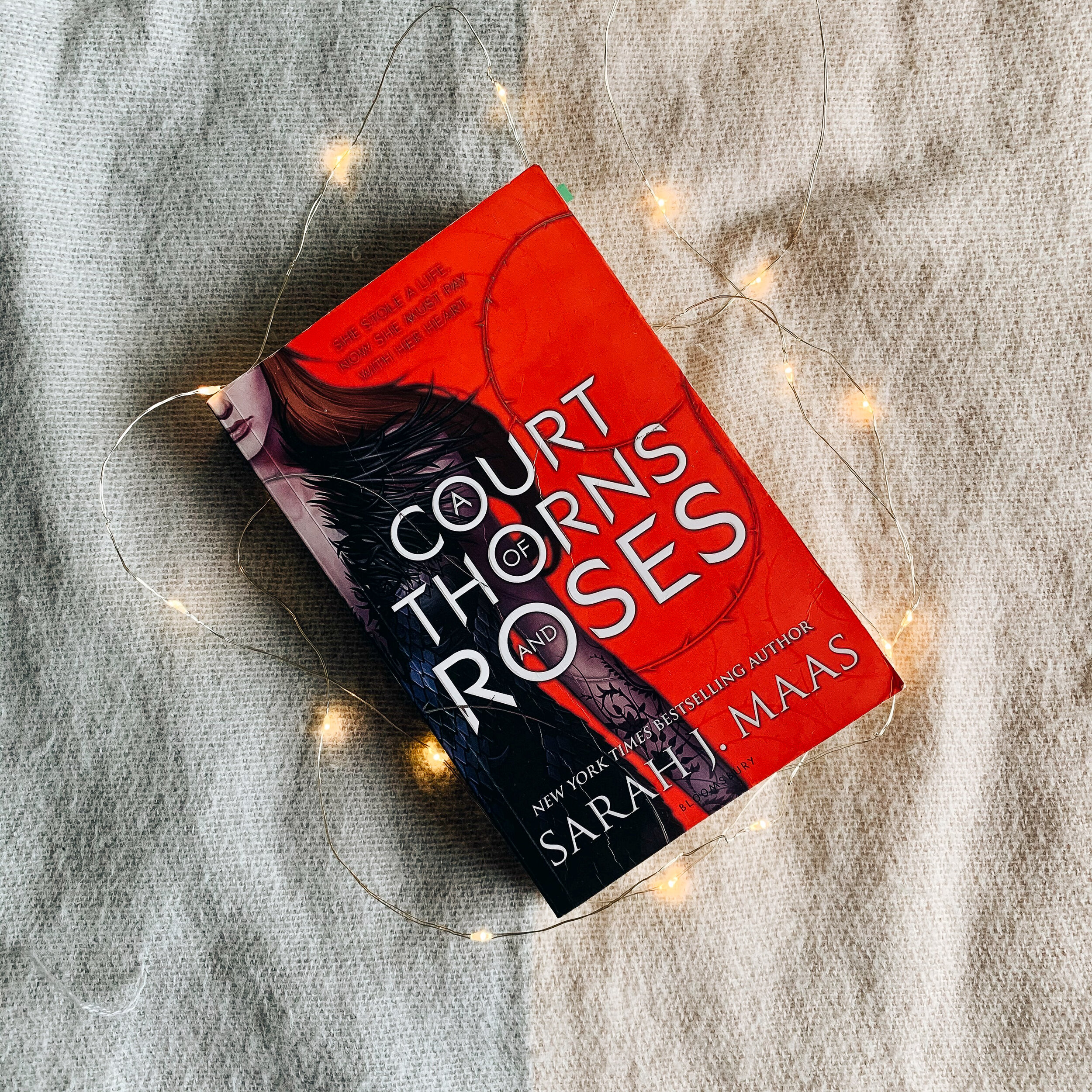
Review: A Court of Thorns and Roses By Sarah J Maas (Re-read)

★★★☆☆

This was my third reading of A Court of Thorns and Roses, and my feelings and opinions on it haven’t changed much at all from the second reading, but my initial thoughts were quite different. So let’s get into this (spoiler-free) review! 

First and foremost, I always enjoy the whole Beauty and the Beast retelling-vibe. I also thought that the world-building was pretty great. You get enough in this first book of the series to get a feel for the world, but to leave some things to be found out in the later books which I really like. And honestly, the last 100 pages are so good, they’re darker and they’re raw and I really enjoy them. Every time, I forget how much better this series gets the longer you get into it. 

FullSizeRender 15-2.jpg

The character development, and development of the relationships and relationship dynamics throughout the book I also think is excellent. In the beginning, Feyre was pretty damn annoying. It was frustrating being in her head, but honestly, by the end of the book she was much more interesting and maybe it was the fact that she went through SO much at the end that she was a way better POV. As she loosened up at the Spring Court, and formed connections with Tamlin, Lucien, Alis and even Rhysand, she became more interesting. 

Lucien and Rhysand are still my two favourite characters from this book. They are funny, witty and just way more dynamic than the predictable and a bit boring Tamlin. Tamlin is painted as ‘swoon-worthy but I really do find him boring and predictable. The dialogue between Feyre and Lucien is probably the most interesting part of the first 60% of the book to be quite honest. Lucien backstory never gets easier to read, it always makes me so sad. Maybe it’s because we get more information about Lucien than Tamlin, which is why I like him so much more? I don’t know. Tamlin seems like he’s just a bit self-serving? It’s interesting. Also, let’s just say, don’t take Rhysand at face value. This book only hints at the depth and layers of these characters and the world which you really only get into in book two. 

Don’t feel bad for one moment about doing what brings you joy 

Sarah J Maas

But, compared to the other books in the series, this one is seriously lacking. It definitely sets up the world and the characters for so much potential, but on it’s own, it falls short. Elain and Nesta are interesting characters, Elain is sweet but oh so very useless, and Nesta is icy and brutal. I will be very very interested to read a book from her POV to hopefully get a bit deeper into why she is how she is, because honestly, at the beginning of this book her words and actions are inexcusable. She is definitely better when we encounter her later in the book, but still. Doesn’t make up for her initial behaviour.

Let’s finish this mess of a review by saying it’s hard to review a book impartially when you have read the next ones… Honestly though, if you read this and don’t vibe with it that much, PLEASE try to read the next one. This is my least favourite book in the series and it honestly gets SO much better! If you’ve read this book, or the series, let me know what you think of it!